
Last updated November 2, 2026
 Sweep & inspection
 Caps & crowns
 Flue relining
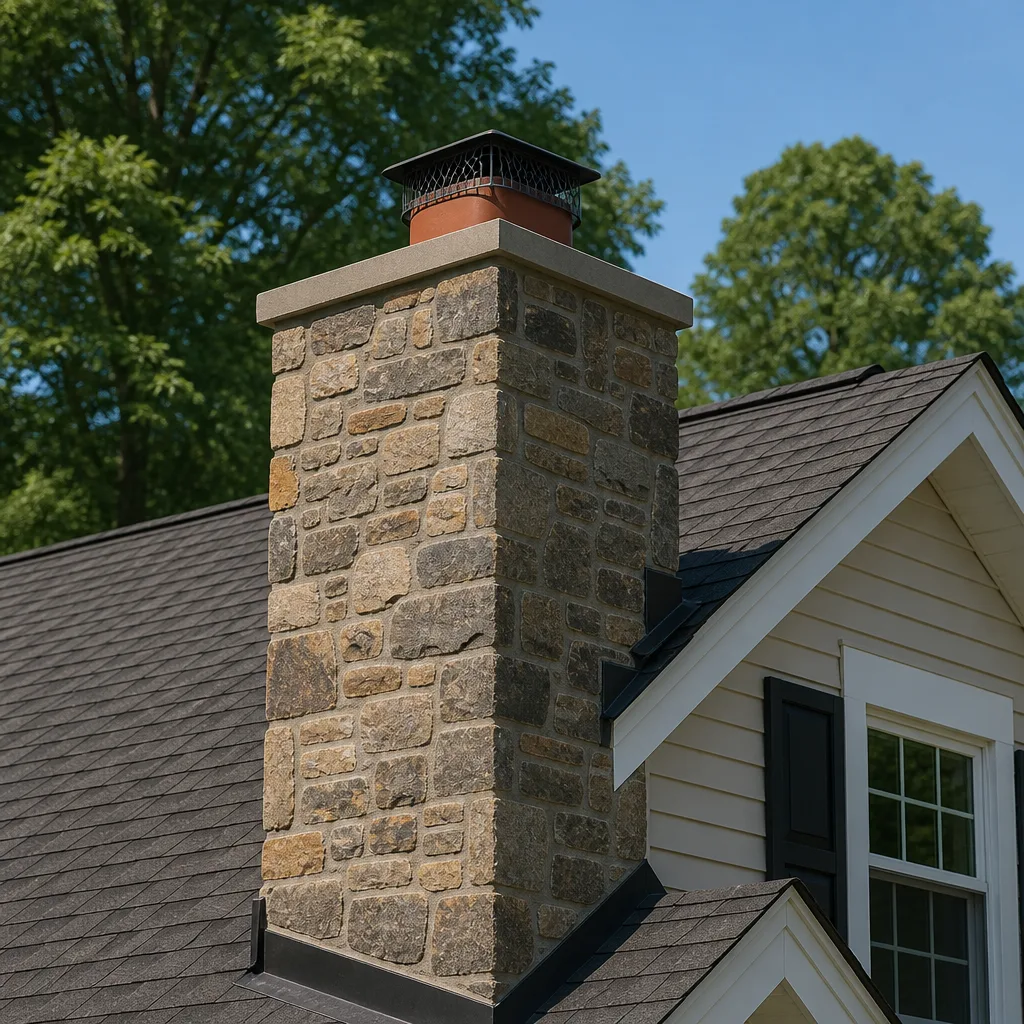 Masonry repair
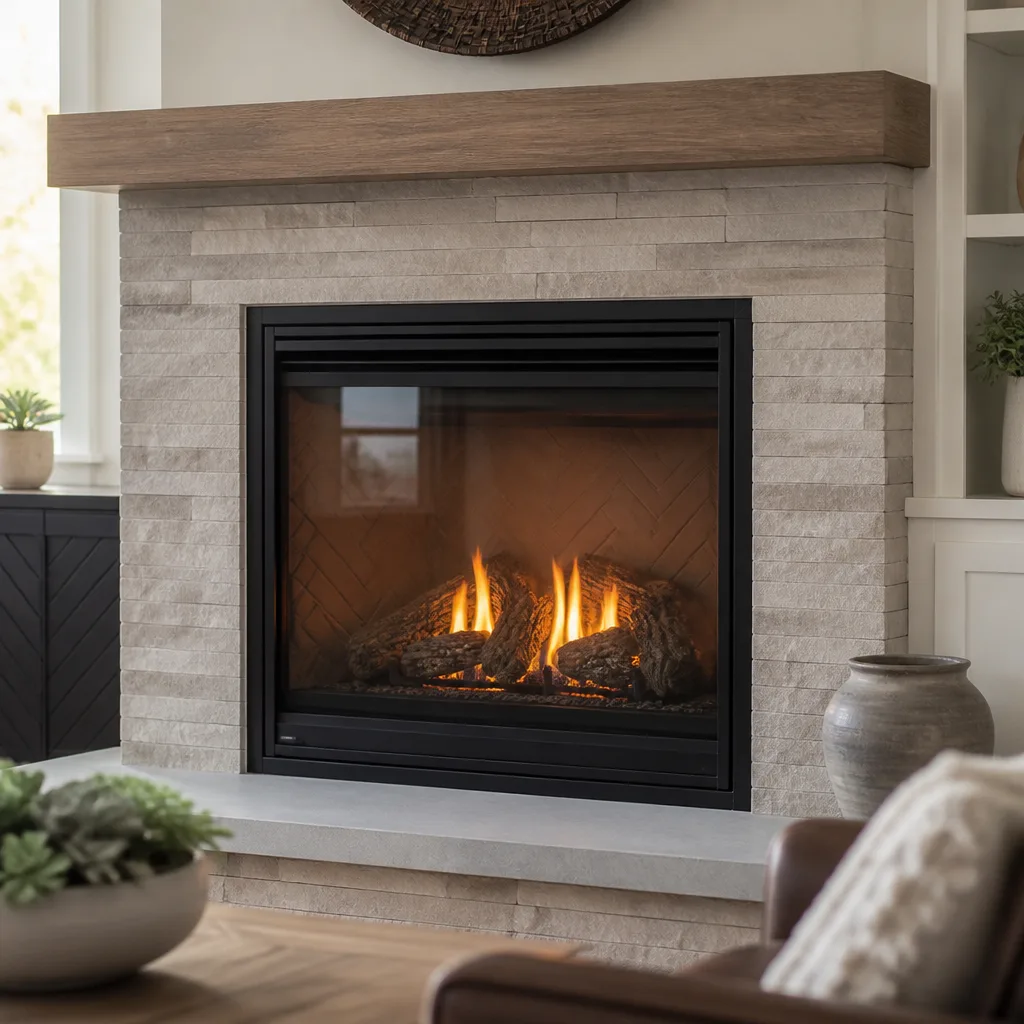 Gas fireplace service
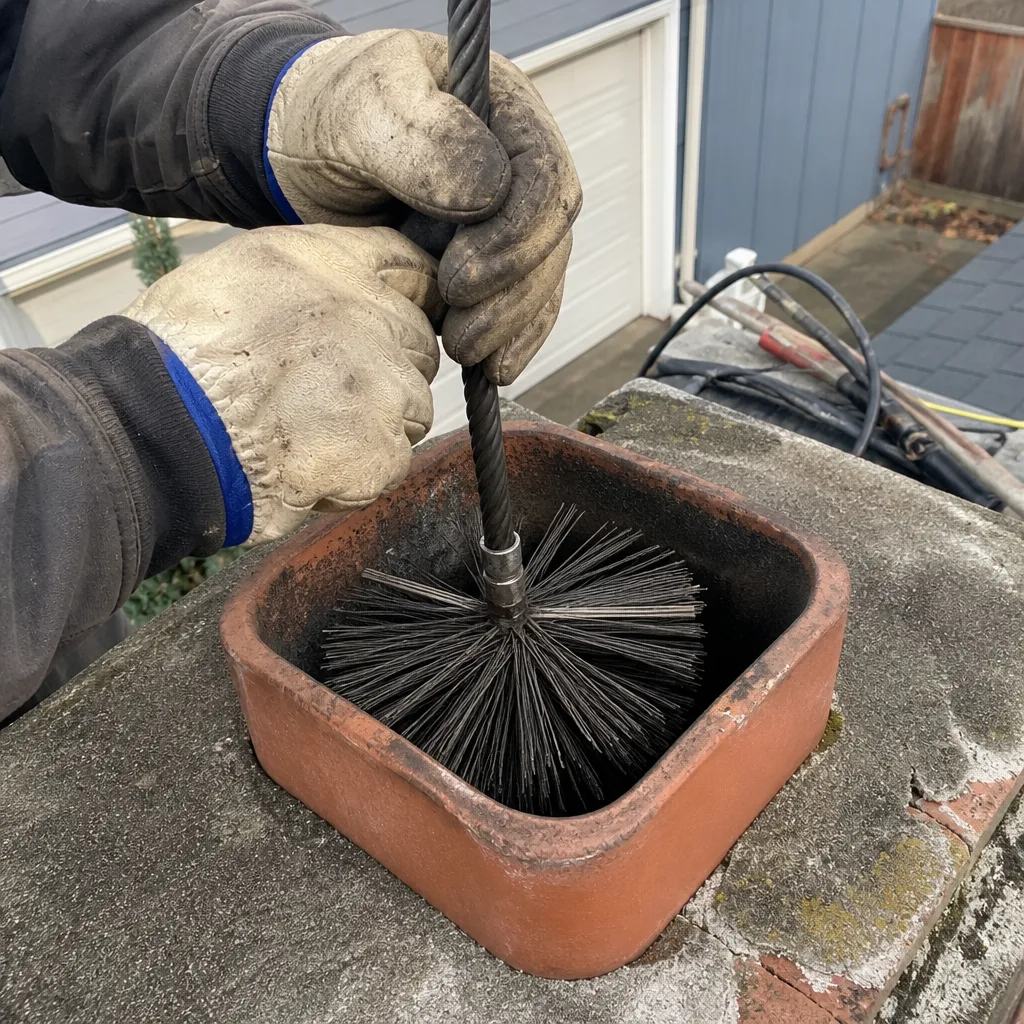
Level 1 sweep and inspection to the NFPA 211 annual standard - flue, crown, cap, and flashing checked and photographed
Chimney sweep logs do not sweep chimneys. They loosen some creosote - which then falls where a brush and vacuum still have to collect it.
Chimney Sweep Troubleshooting: Common Problems and How to Fix Them
Smoke rolling back into your living room isn’t always a dirty flue. It’s sometimes a pressure problem your sweep can’t fix by cleaning alone, and a company that sweeps without diagnosing will leave you with the same problem and a lighter wallet. In Mountain View, where homes range from 1950s ranchers to recent builds with tight envelopes, we see the full spectrum of chimney failure modes. This guide and our The Complete Chimney Sweep Guide for Mountain View Homeowners map symptoms to root causes with enough specificity that you can describe your problem in technical terms before anyone shows up, and understand exactly what the fix should involve.
Quick Answer
Most chimney problems boil down to three mechanical failures: airflow obstruction, pressure imbalance, or moisture entry. The most common homeowner-reported symptom, smoke entering the house, is usually caused by negative pressure in the home or a cold flue, not a dirty chimney. The most expensive symptom to ignore is a damaged flue liner, which often presents as poor draw or falling debris and can’t be resolved by sweeping.
Styles & brands we work with
- Sweep & inspection
- Caps & crowns
- Flue relining
- Masonry repair
- Gas fireplace service
Table of Contents
- Backdraft vs. Downdraft vs. Negative Pressure: Three Different Problems
- The Cold Flue Startup Problem and the Priming Fix
- Odor Troubleshooting by Smell: Creosote, Animals, and Decaying Masonry
- When a Damaged Liner Is the Real Cause of Poor Draw
- How to Document Your Symptom in Terms a Sweep Will Take Seriously
- The Dryer Vent Angle: Why Your Chimney Sweep Should Be Checking It Too
- Seasonal Patterns: What Mountain View’s Mild Climate Does to Chimneys
- What You Can Safely Check Yourself vs. What Needs a Pro
Backdraft vs. Downdraft vs. Negative Pressure: Three Different Problems
When smoke comes back into the house, homeowners often report it as one generic problem: “the chimney is backed up.” But there are three distinct mechanisms that produce smoke entry, and each requires a different fix. Knowing which one you have changes the entire conversation with a Chimney Sweep.
Backdraft is when the chimney reverses direction. Instead of drawing combustion gases up and out, it pulls air down the flue and pushes smoke back through the fireplace opening. This happens when the house is at a lower pressure than the outside air. Modern homes with tight construction, running kitchen exhaust fans, bath fans, or a furnace competing for combustion air create this condition regularly. In Mountain View, homes built after California’s Title 24 energy efficiency standards went into effect in the 1980s are particularly prone, as are older homes that have had air sealing retrofits.
Downdraft is wind-driven. An exterior chimney on a windy day, or a chimney shorter than the roof peak, can have wind forced down the flue. The solution is often a chimney cap designed to prevent wind eddying, or a flue extension to raise the termination point above the wind pressure zone.
Negative pressure is the house itself starving the chimney for air. A fire consumes roughly 100 to 300 cubic feet of air per minute. If the house can’t supply that air, the chimney becomes the intake. Exhaust fans running, a dryer operating, a water heater or furnace venting, or simply a tightly sealed home all contribute. The corrective measures include opening a window slightly during burning, installing a dedicated combustion air supply, or deploying a mechanical draft inducer on the flue.
Here’s the pattern we’ve observed in Mountain View homes: a 1960s tract house with original single-pane windows will rarely have negative pressure problems because the house leaks enough air naturally. A house that’s been re-windowed, re-insulated, and had its attic sealed will sometimes fail on the first cold night because the home never had a make-up air strategy designed in. That’s a diagnostic point most sweeps miss if they arrive with a cleaning and nothing else.
Once our team has swept and inspected your chimney in Mountain View, we can tell you which of these three mechanisms is causing your smoke problem, because we test the system under actual operating conditions, not just with a flashlight.
The Cold Flue Startup Problem and the Priming Fix
Interior chimneys in mild climates like Mountain View have a startup problem that cold-climate chimneys don’t. When the flue interior is cold and dense with chilled air, that air sits in the chimney like a plug. The first smoke from a fire is too weak and cool to push the plug up and out, so it spills into the room. Your house sees this as a “smoking fireplace” when the chimney is, in many cases, perfectly clean.
The fix is called priming the flue, and it costs nothing.
- Before lighting your kindling, take a sheet of newspaper, roll it into a loose tube, and light it.
- Hold the lit newspaper inside the firebox, close to the damper throat, for about 30 to 60 seconds.
- When the flame draws upward cleanly, the flue is primed. Light your main fire.
- If the newspaper smoke wavers or spills, the flue needs more warm-up time, or there’s another obstruction to rule out.
This works because warming the flue initiates the stack effect, the same principle that draws smoke up a chimney in the first place. Cold, dense air falls; warm air rises. Once you get a small, brief column of warm air moving, the flue will accept the main fire.
A variation on this problem appears in Mountain View’s summer-to-winter shoulder seasons. In October and November, the outside temperature drops into the 40s at night, but the masonry has been warm all summer and early fall. The temperature differential between inside and outside is low, which means weak natural draft. That’s when homeowners light the first fire of the season and get a face full of smoke. If the season’s first fire always smokes but later fires don’t, the cold flue and a weak temperature differential are the usual cause.
Odor Troubleshooting by Smell: Creosote, Animals, and Decaying Masonry
Chimney odors are the cheapest diagnostic tool you own. Each smell points to a different failure mode, and describing the odor accurately to a sweep narrows the investigation immediately.
Campfire or barbecue smell in summer. This is creosote activating. During burning season, combustion deposits a thin, tar-like residue on the flue walls. In warm, humid months, that residue absorbs moisture and releases the smoke odor back into the house. It’s strongest on days above 80°F and during the drippy, foggy weeks Mountain View gets in June and July. The fix is a thorough chimney sweep to remove the creosote deposits, not an air freshener and a closed damper. Closing the damper traps humidity in the flue and makes the smell worse over time.
Acrid, urine-like, or organic smell, often stronger at night. Something is or was living in the flue. Raccoons, squirrels, and birds nest in uncapped chimneys, and the nest material plus droppings produce a smell that’s hard to mistake once you’ve smelled it. A chimney cap with a screened top is the permanent fix. Removal of the animal and nest must come first. In Mountain View, raccoon intrusion in uncapped flues is common in the spring; the animals use the flue as a den, and if there are young present, removal becomes a two-step job: wait until the young can exit, then sweep and cap.
Damp, musty, or earthy smell, like a wet basement. Water is entering the masonry. This can be from a cracked crown, failed flashing, spalling bricks absorbing rain, or a missing chimney cap. Once water gets into the masonry and the flue, it dissolves and re-deposits the salts in the brick, and the resulting efflorescence is a visual marker. The odor comes from mold and mildew living in the always-damp flue. This is a structural issue, not a cleaning issue, and it leads to more expensive repairs the longer it waits.
Our service handles all three categories differently, because the fixes are genuinely different: a sweep for creosote odor, a cap and removal for animal intrusion, and masonry repair or a cap for water entry. We carry the chimney repair capability in Mountain View that means an odor diagnosis leads directly to a fix in the same appointment, not a referral to another contractor.
When a Damaged Liner Is the Real Cause of Poor Draw
Poor draw is not always a cleaning problem. A damaged or deteriorated flue liner changes the effective diameter of the flue, disrupts the smooth flow of combustion gases, and sometimes forces smoke to leak through cracks in the liner and into the home’s wall cavities. This is the scenario where a sweep that only cleans, without a camera assessment, misses the actual problem and leaves the homeowner with a recurring symptom they’ve paid not to fix.
Clay tile liners crack. This happens for a few reasons: chimney fires creating thermal shock, freeze-thaw cycling (less common in Mountain View but possible in coastal-adjacent microclimates), settling foundations, and simple age. A cracked liner allows smoke, heat, and carbon monoxide to pass through to surrounding masonry and wood framing. The draw suffers because the flue is no longer a sealed, smooth channel; edges of cracks create turbulence, and turbulence kills draft.
The telltale symptoms of liner damage include:
- Smoke smell in rooms adjacent to the chimney, not just the fireplace room
- Falling debris visible in the firebox: flakes of tile, mortar crumbs, or brick chips
- A gradual decline in draw over several seasons, even after the chimney has been swept
- White or brown staining on the chimney exterior, indicating water penetration through cracked masonry
- In gas appliance venting, the flue condensation corrodes the liner from the inside, and pilot outages or flame rollout can indicate a degraded vent
If the liner is cracked but the flue structure is otherwise sound, we restore liners with HeatShield, a ceramified resurfacing system that seals the cracks and smooths the flue bore without demolishing the existing masonry. If the liner is beyond restoration, or the flue shape doesn’t suit a rigid liner, we install DuraFlex flexible liners, which adapt to irregular or offset flue paths common in older Mountain View homes. Both are professional grade materials, not improvised repair kits, and both are evaluated for fit on a case-by-case basis after camera inspection.
Sweeping a chimney with a failed liner is not a complete solution. It removes the combustible deposits but does not address the structural breach. The camera inspection matters, and a sweep who doesn’t offer one is leaving money on the table for the homeowner to spend twice.
How to Document Your Symptom in Terms a Sweep Will Take Seriously
When you call a sweep, the default assumption from some companies is that you need a cleaning, because cleaning is the most common service. But a good diagnostic sweep will ask questions before reaching for the brush. Here’s how to answer those questions in a way that leads to a real diagnosis.
- Write down exactly when the symptom appears. Does smoke enter the house on the first fire only, or every fire? Does it matter if the outside temperature is below 55°F? Does the wind direction matter? These timing patterns separate cold flue, downdraft, and negative pressure causes.
- Note which exhaust appliances were running. Was the kitchen vent fan on? The dryer? A bathroom fan? A central vacuum? These devices compete with the chimney for house air, and a symptom that only appears when the kitchen fan is running is a negative pressure diagnosis.
- Describe the smoke’s behavior, not just its presence. Does the smoke roll into the room in a lazy, slow spill, or does it billow suddenly and strongly? Slow spills are usually draft or cold flue issues; sudden billows are pressure events.
- Capture the smell accurately. Use the odor categories from earlier: campfire smell, animal smell, musty smell, or a sharp chemical smell. Each maps to a different defect.
- Record any recent changes to the home. New windows, attic insulation, a range hood upgrade, a bathroom remodel. A home that gets tighter often develops chimney problems it didn’t have before.
- Take photos if there’s visible debris or staining. Falling flakes, water stains on the ceiling near the chimney, or white efflorescence on the exterior masonry all become evidence for a correct diagnosis before the sweep ever climbs the roof.
This kind of documentation prevents the “we’ll just sweep it and see” response. It also signals to a serious technician that you’re operating with the right mental model, and it gets you a faster, more accurate evaluation. When our team arrives at a Mountain View home with notes like these, we can often pinpoint the issue before we even set up the ladder.
The Dryer Vent Angle: Why Your Chimney Sweep Should Be Checking It Too
Chimney and dryer vent problems are rarely discussed together, and that’s a mistake. Both systems move combustion byproducts and hot air out of the house, both are subject to the same physics, and both are leading causes of residential fires. A company that understands both sees the home’s venting as one system, not two separate jobs.
The connection is practical: the same pressure imbalances that cause a fireplace to backdraft also affect dryer vents. A dryer in a tightly sealed laundry room competes for air with the furnace, water heater, and fireplace. When the dryer can’t draw enough air, it can’t push air through the vent efficiently, and the result is accumulated lint in the duct, longer dry times, and elevated fire risk. In Mountain View, where drought years leave homes extra dry and static-prone, lint accumulation is already accelerated, and a restricted vent makes it worse.
We offer dryer vent cleaning in Mountain View as part of our core service set for exactly this reason. One appointment can address the chimney and the dryer vent together, and the inspection findings from one system often connect to the other. Our dryer vent work uses proper components from Famco, not the foil accordion duct materials that are restricted by code in most applications. If your chimney sweep visit turns up a dryer vent full of lint, you don’t need to call a second company.
Seasonal Patterns: What Mountain View’s Mild Climate Does to Chimneys
Mountain View’s climate is unusual for a chimney market. We don’t get the deep freeze-thaw cycles of the Midwest, and we don’t get the heavy snow load of the Sierra. But we do get other conditions that cause specific problems.
The summer fog and marine layer bring humidity into flues that sit dormant from May through October. That humidity activates creosote and accelerates corrosion in metal components. Masonry absorbs moisture during these months, and when the temperature swings, micro-cracking progresses. Chimneys that are not capped are slowly accumulating water intrusion all summer, and the first fire of the season reveals damp, weak masonry and a musty smell.
Our wildfire-season winds create downdraft conditions in some homes, particularly those on the windward side of a ridge or in exposed flat neighborhoods. The chimneys most affected are exterior masonry chimneys and prefab systems with short termination points. A properly sized and oriented cap, or a flue extension, resolves most wind-driven downdraft cases in this area.
The mild winter means intermittent burning, not daily burning. Intermittent use allows creosote to deposit in layers that cool and harden between burns, making them more difficult to remove in a standard sweep. It also means users are less practiced in starting and maintaining a draft, which leads to more cold-flue smoking complaints. Homes in the Waverly Park and Blossom Valley areas, with their mix of 1950s through 1980s construction, show the full range of these seasonal patterns; we’ve worked in every corner of the city and the symptom clusters are consistent by era of construction and retrofit history.
What You Can Safely Check Yourself vs. What Needs a Pro
There is a narrow band of chimney troubleshooting that a homeowner can safely perform, and a much larger band that should be left to a trained chimney technician. The dividing line is simple: if it involves a ladder, the roof, the flue interior, or opening any mechanical component, call a professional. Chimney work is inherently height work, and the flue is not designed for amateur exploration.
Safe to check yourself:
- Look for visible debris in the firebox before the first fire of the season.
- Check the damper mechanism opens and closes smoothly.
- Observe whether smoke spills on the first fire only or consistently.
- Note which exhaust fans were running when smoke entered the room.
- Check for water stains on the ceiling near the chimney after rain.
- Inspect the exterior chimney from the ground: visible cracking, missing mortar, or plant growth.
Leave to a professional:
- Any work on the roof, flue interior, or chimney crown
- Camera inspection of the flue liner
- Creosote removal of any grade beyond light surface dust
- Animal removal from the flue
- Liner assessment, resurfacing, or installation
- Dryer vent cleaning beyond the first few feet of the duct
The safety stakes are real. Chimney fires burn at temperatures that can exceed 2,000°F, and a cracked liner is a carbon monoxide pathway into the living space. There’s a reason the National Fire Protection Association’s Standard 211 requires annual inspection of chimneys, fireplaces, and vents. That inspection is not a formality; it is the cheapest insurance against the most expensive outcome.
Common Mistakes to Avoid
- Lighting a first fire without checking the damper position. This is the single most common cause of a smoke-filled living room in Mountain View, and it takes five seconds to prevent. A closed or partially closed damper turns the firebox into a smoke chamber.
- Assuming every smoke problem means the chimney is dirty. A dirty chimney is one possible cause; cold flue, negative pressure, wind-driven downdraft, and liner damage are the others. Sweeping a chimney with a pressure problem gets you a clean chimney that still smokes.
- Sealing every air leak in the house before addressing combustion air. Older Mountain View homes that get retrofitted for energy efficiency often develop backdrafting problems they didn’t have before. If you’re planning air sealing, plan for make-up air at the same time.
- Ignoring a summer odor and hoping it goes away in fall. Creosote odor in summer signals active moisture in the flue, and moisture accelerates every form of deterioration. The odor is the early warning; the repair bill is what happens when you wait.
- Installing a universal chimney cap without checking the specific wind and moisture exposure. Caps are not one-size-fits-all. The wrong cap can worsen downdraft or fail to exclude rain from a particular angle, and Mountain View’s coastal wind patterns don’t respect a generic product.
- Closing the damper tightly during humid months to keep the smell out. This traps moisture and increases creosote odor over time. The better fix is removing the source: a sweep to remove the deposits.
- Using the fireplace when the liner has visible cracking or falling debris. A damaged liner is not a cosmetic issue. It is a fire and carbon monoxide barrier, and running a fire through a compromised liner is gambling with the structure itself.
See the difference
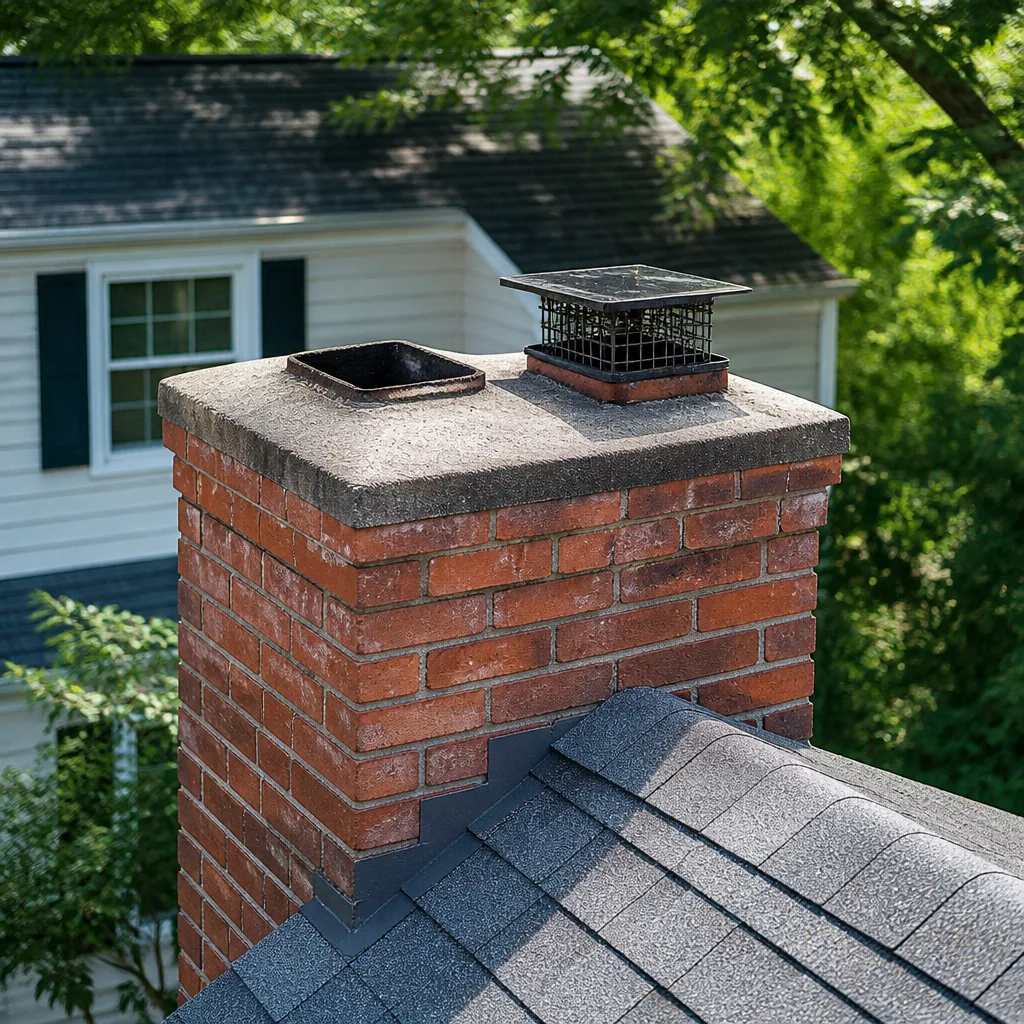
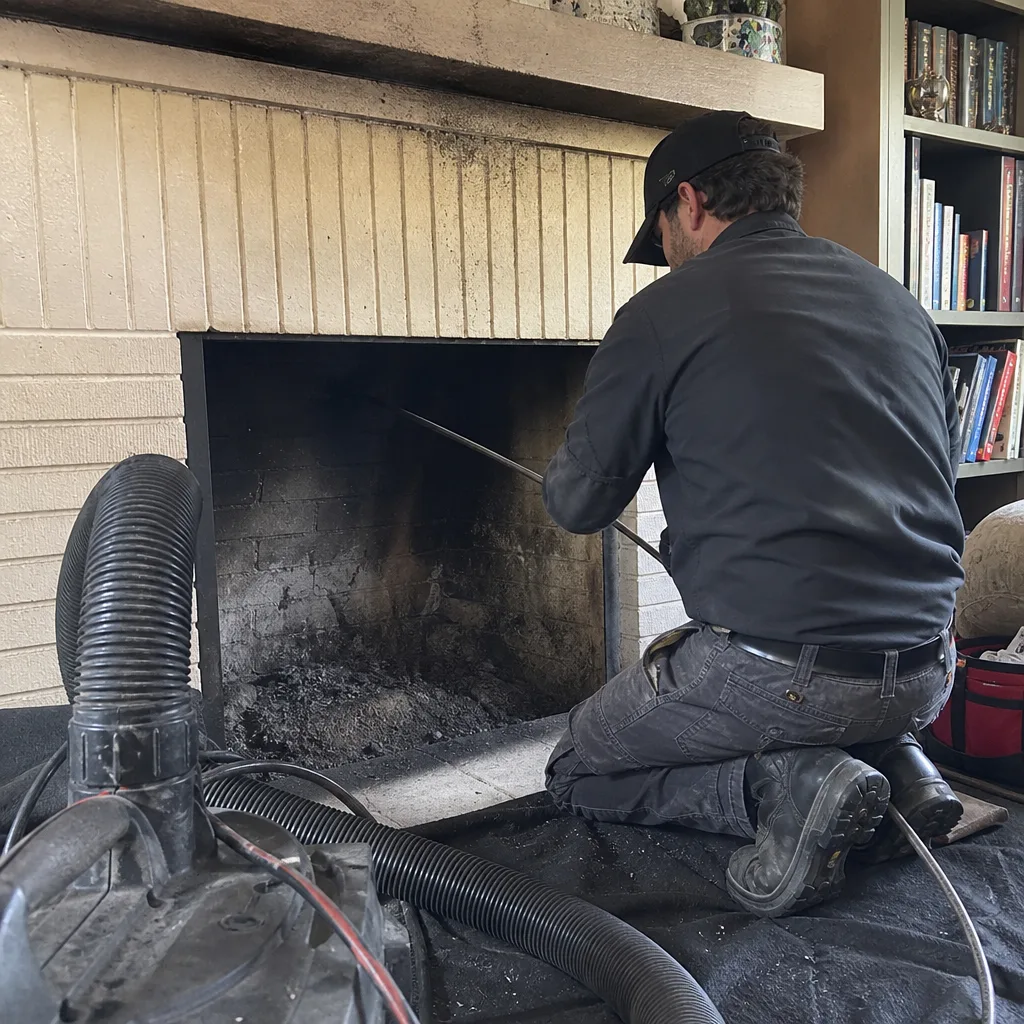 Before
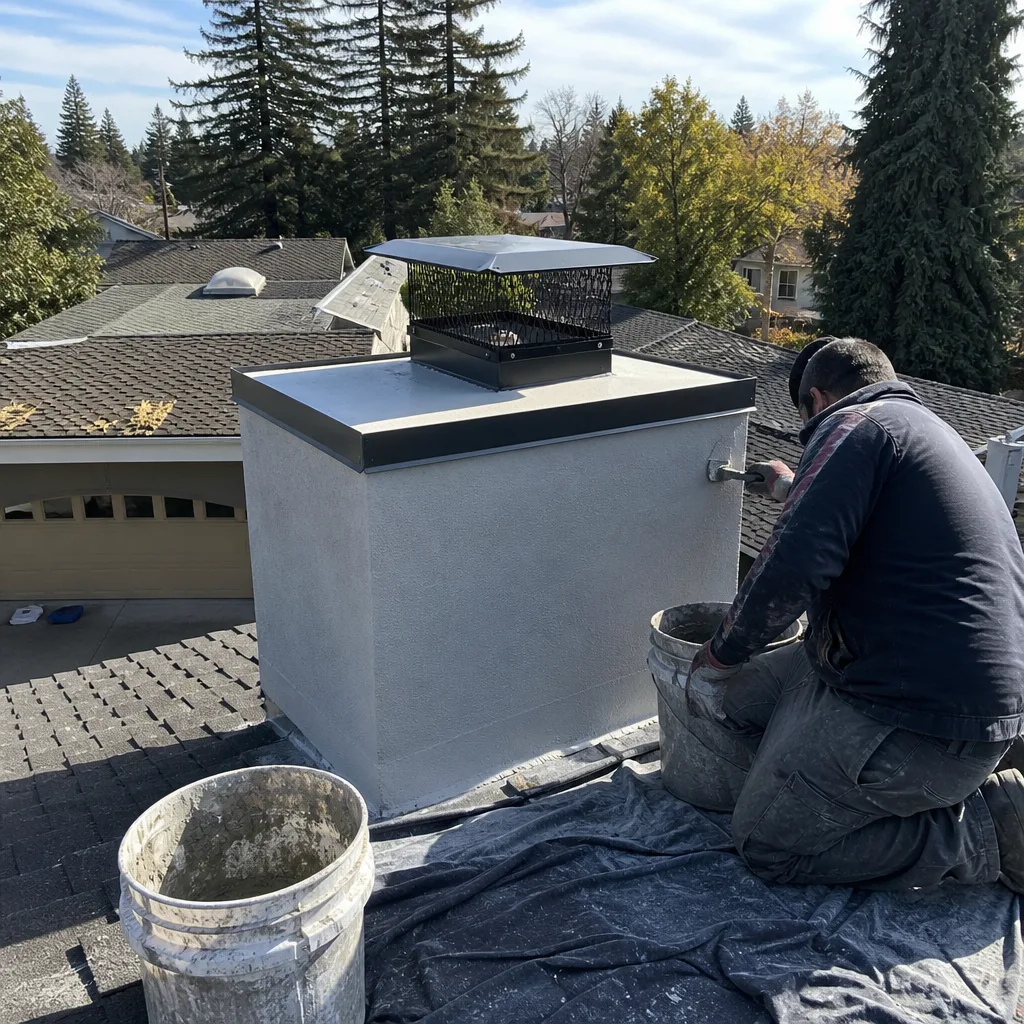 After
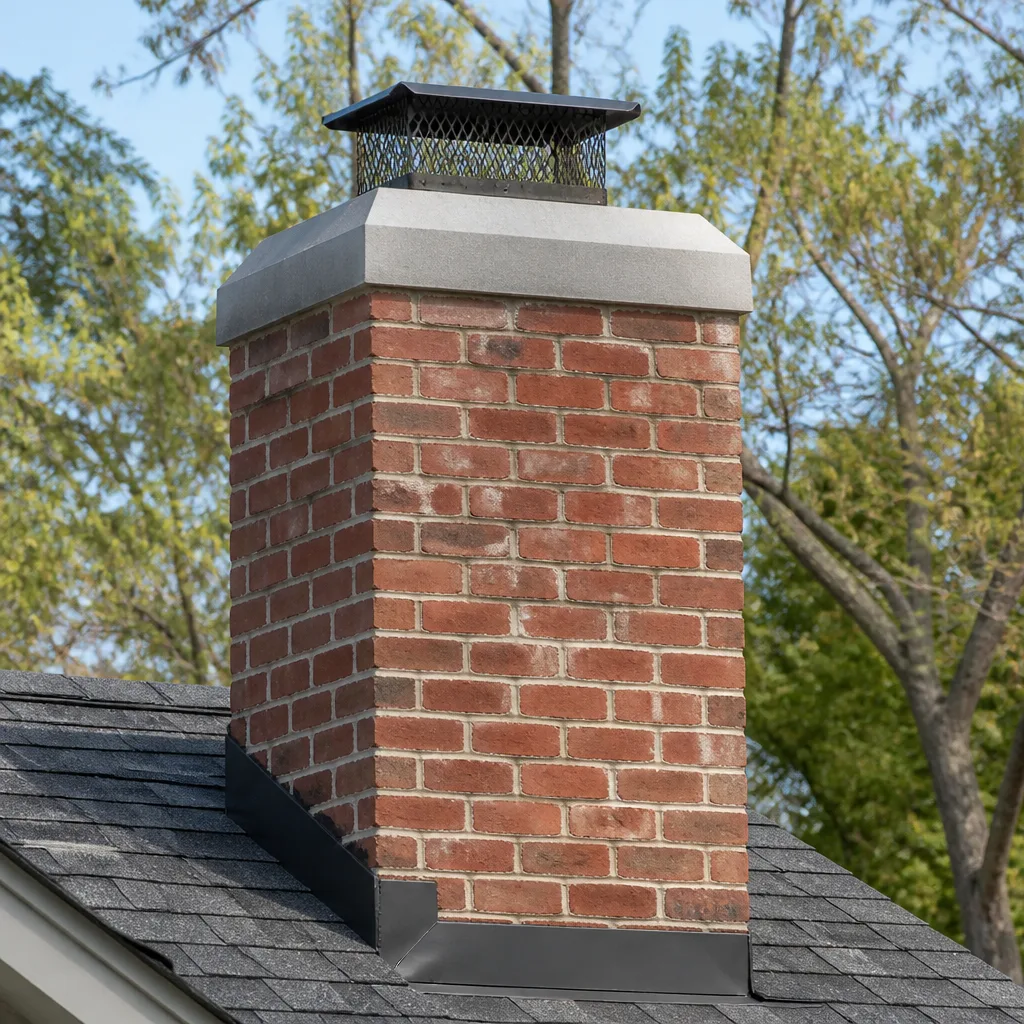
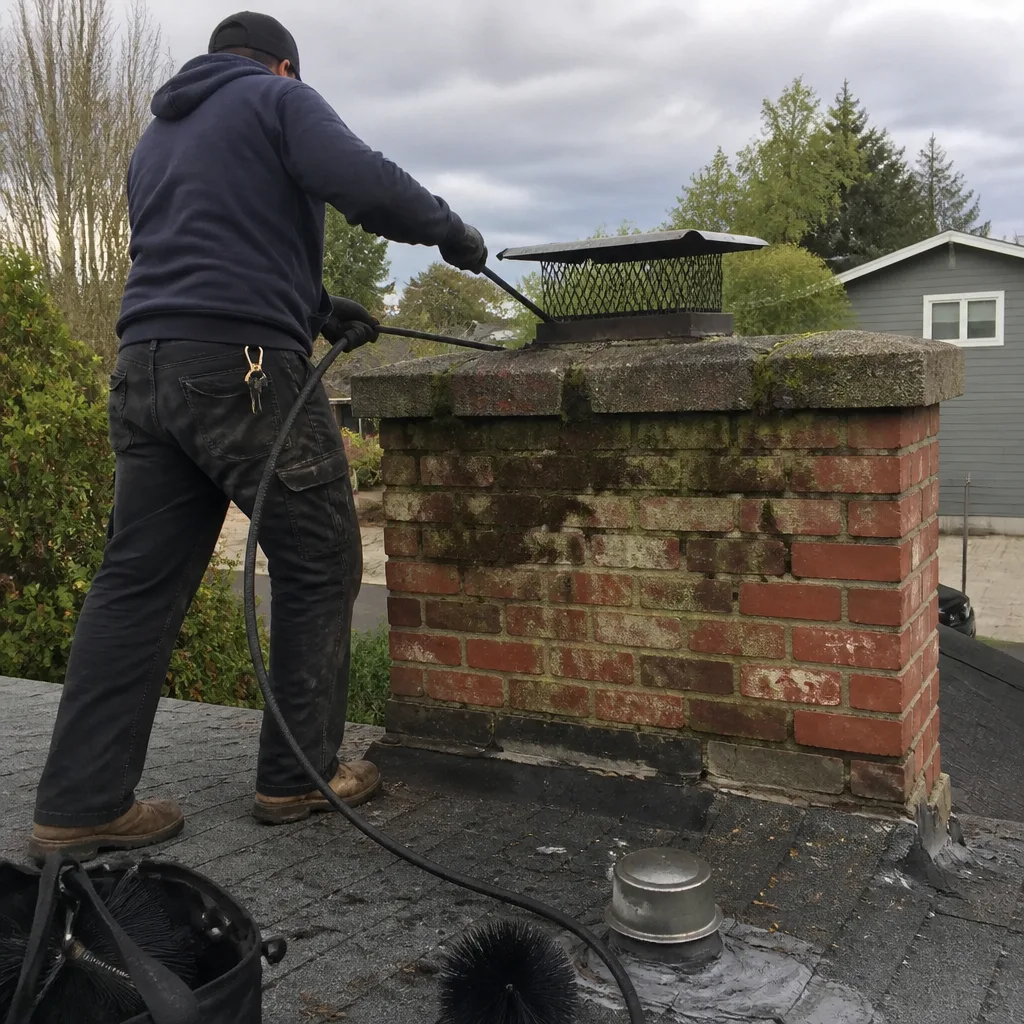 Before
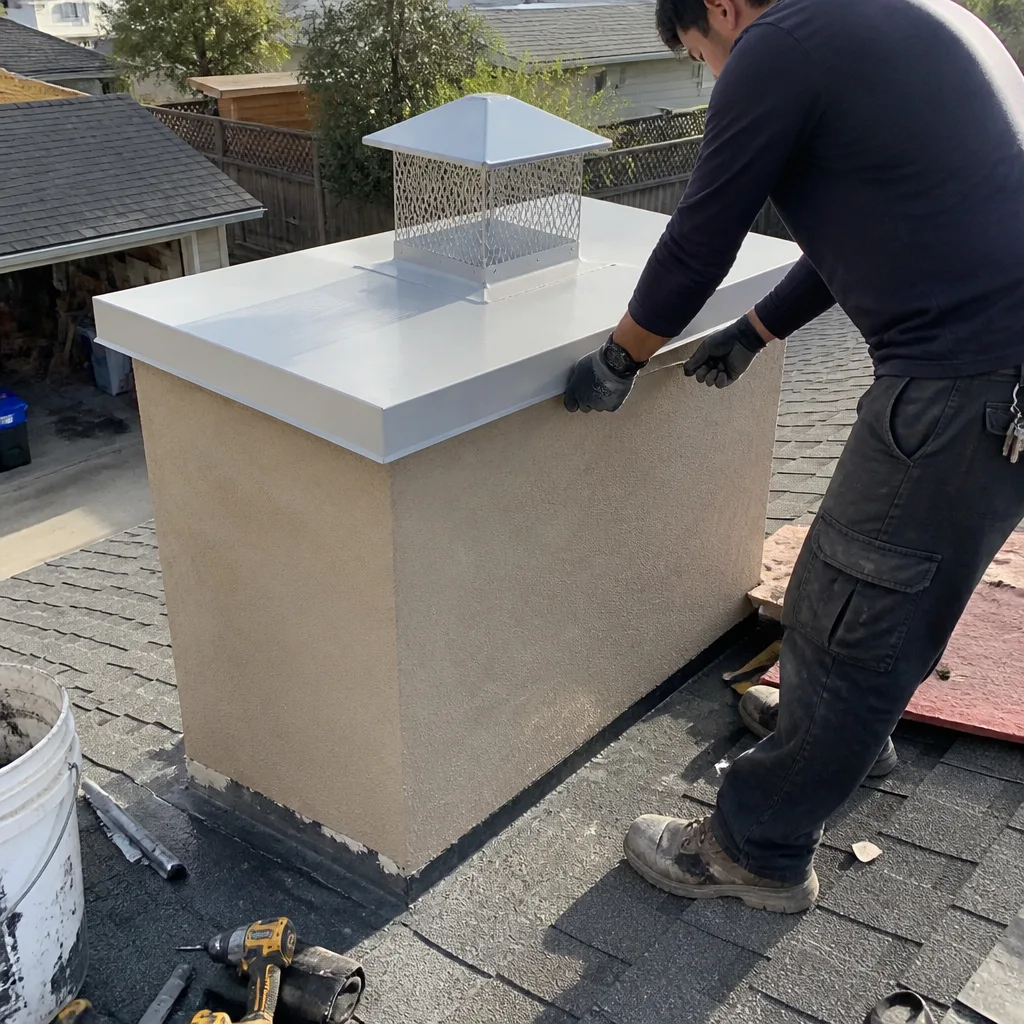 After
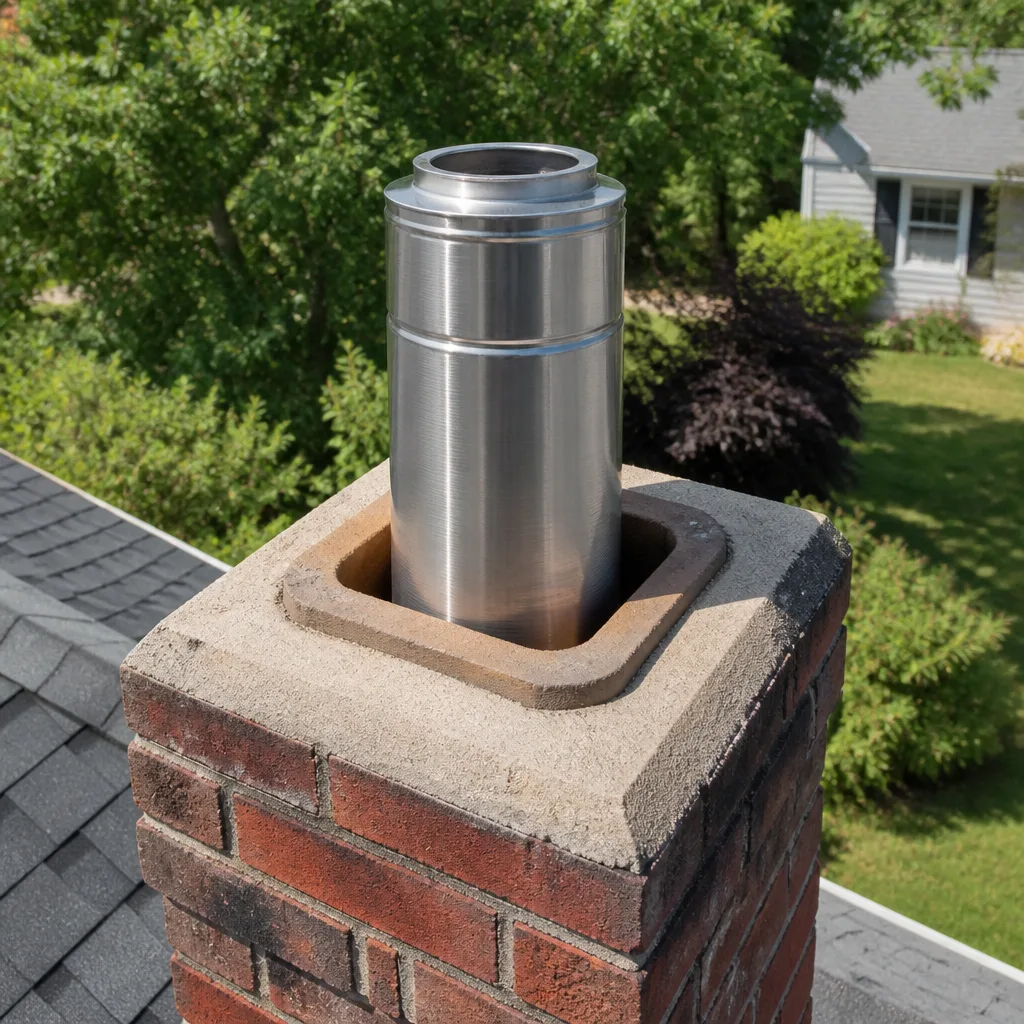
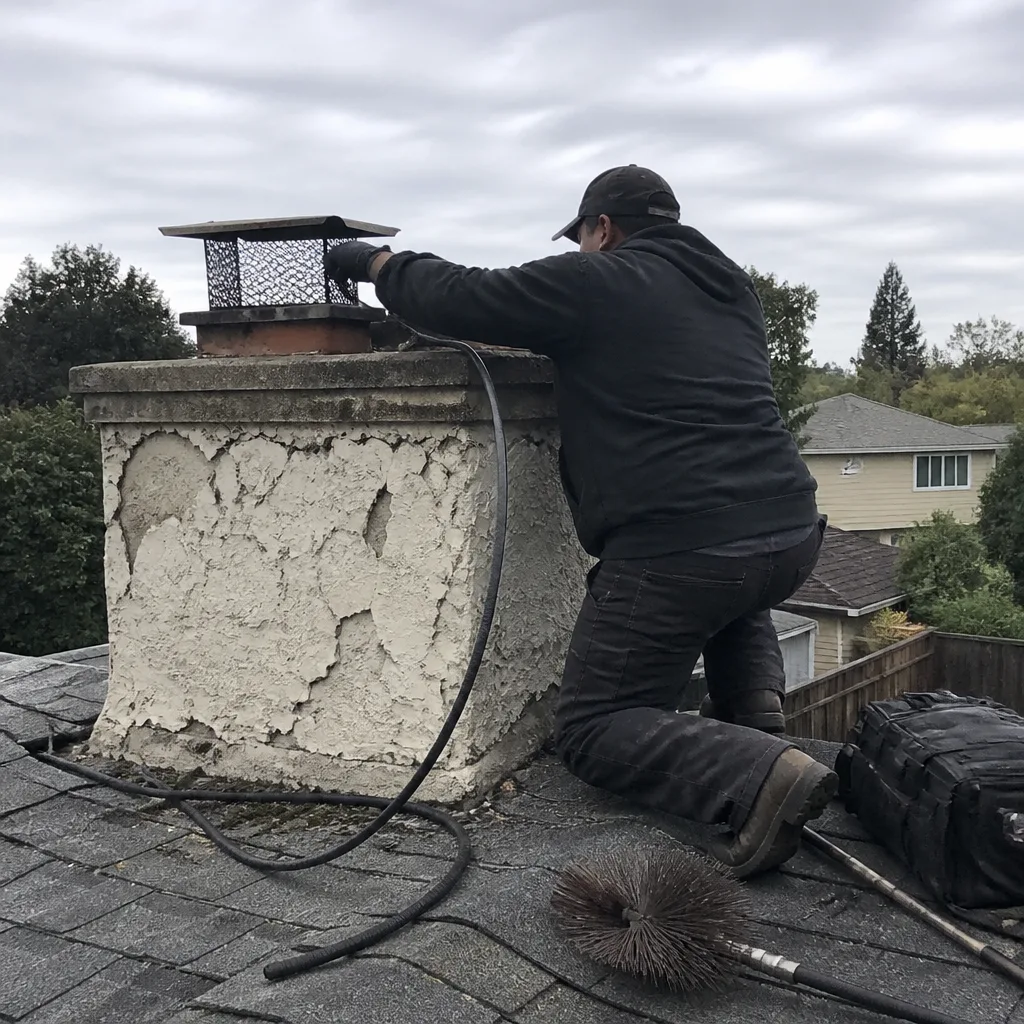 Before
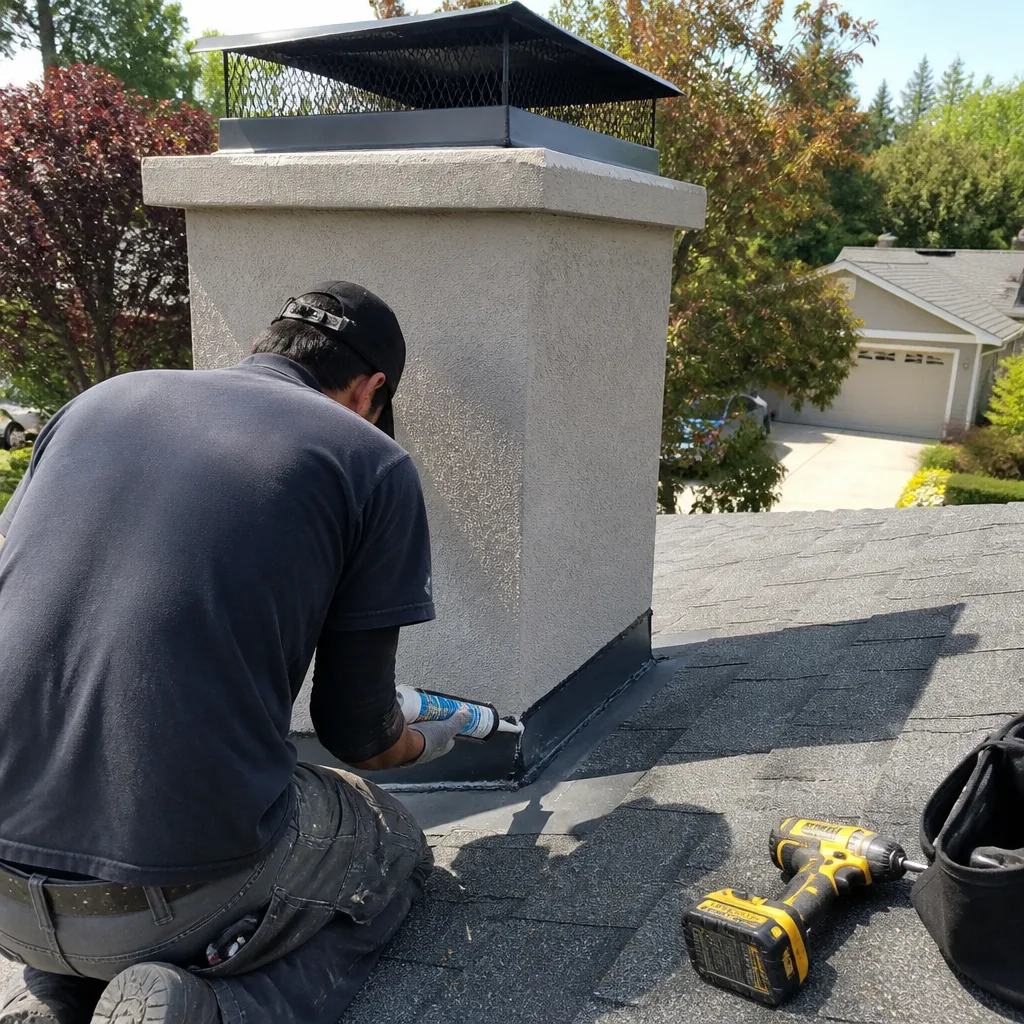 After
When to Call a Professional
Call a chimney professional when you see smoke entering the house more than once, when you smell an animal odor from the flue, when debris is falling into the firebox, when water stains appear on the chimney or ceiling, or when the fireplace has been used for a season without an inspection. These are not conditions that resolve on their own. In Mountain View, Chimney Sweep Mountain View home page details our full service set: sweeping, dryer vent cleaning, and chimney repair, all in-house, all with the same diagnostic rigor. Chimney Sweep Mountain View offers free estimates in Mountain View, call (866) 596-8327.
Frequently Asked Questions
Identify the mechanism first: a cold flue responds to the newspaper priming technique, negative pressure requires opening a window or adding combustion air, and downdraft needs a cap or flue extension. Cleaning helps only if the obstruction is creosote or debris; many smoke problems in Mountain View homes are pressure-related, not dirt-related. Call (866) 596-8327 for a diagnostic evaluation.
An inspection and diagnosis typically costs less than a sweep and repair combined, and some companies, including ours, roll the diagnostic into the estimate process. The most expensive path is skipping the diagnosis and paying for a sweep that doesn’t fix the actual problem. Call (866) 596-8327 for a free estimate in Mountain View.
Summer chimney odor is almost always activated creosote absorbing moisture from humid air, or animal intrusion. The fix is a sweep to remove the deposits or an animal extraction and cap installation. Closing the damper makes the smell worse over time by trapping humidity in the flue.
The NFPA standard is annual inspection and sweeping as needed, and our mild, intermittent burning season means most Mountain View chimneys accumulate a season’s worth of deposits each year. A chimney used weekly through the winter will usually need an annual sweep; one used rarely may go two years, but the inspection should stay annual. Call (866) 596-8327 to schedule.
Many liners can be restored with HeatShield resurfacing, which seals cracks and smooths the flue without demolition. Full relining with a DuraFlex system is indicated when the liner is structurally failed or the flue shape requires a flexible solution. You should not accept a relining recommendation without seeing the camera evidence yourself. We show every homeowner the footage before recommending any liner work.
You run the risk of a chimney fire, carbon monoxide exposure through a cracked liner, or structural water damage that gets more expensive by the year. The inspection catches these conditions while they’re contained, and in Mountain View’s damp-season climate, water entry progresses quickly once it begins. Call (866) 596-8327 for an inspection estimate.
The Bottom Line
Chimney troubleshooting is a diagnostic discipline, not a cleaning job. The homeowner who can distinguish between a cold flue, a pressure imbalance, and a liner defect will get the right fix the first time. The sweep who offers camera inspection, understands the home’s venting as a single system, and carries repair capability alongside cleaning is the one who can actually resolve the problem. In Mountain View, that’s the service we provide: full-system diagnosis, professional-grade materials including HeatShield, Gelco, Olympia Chimney, and Famco, and repair and cleaning under one roof. For more guides & resources, explore our blog, or call (866) 596-8327 and describe your symptom in the terms this guide gave you; the diagnosis will be faster for it.
Written by the team at Chimney Sweep Mountain View, serving Mountain View since 2015.