
DuraFlex Chimney Sweep in Mountain View: A Homeowner’s Guide
DuraFlex is not a type of chimney sweep. It’s a UL-listed corrugated stainless steel chimney liner system, and if your mountain View home has one installed, your sweep procedure, inspection checklist, and repair options are different than they’d be for a traditional tile flue. This guide covers what that means in practical terms: what tools are safe inside a flexible liner, what wear actually looks like, and when a liner needs replacement instead of another cleaning. If you’d rather skip the technical reading and just book an inspection, call our team at (866) 596-8327.
Key Takeaways
- DuraFlex is a stainless steel flexible liner system, not a chimney service brand
- Flexible liners require specific brush types and gentler technique than tile flues
- 304 and 316 alloy grades serve different fuel types; knowing which you have matters
- Older DuraFlex installations show specific failure patterns at joints, collars, and corrugation peaks
- Warranty coverage depends heavily on installation documentation and sweep history
What DuraFlex Actually Is – And Why It Changes Your Sweep
DuraFlex is a flexible stainless steel liner manufactured by Olympia Chimney, designed to reline existing masonry chimneys without tearing out the old flue. It’s corrugated rather than rigid, which means the interior surface has ridges. Those ridges do two things: they give the liner its flexibility for navigating offsets and irregular flue shapes, and they create surfaces where creosote accumulates differently than it would on a smooth tile wall. A technician sweeping a DuraFlex liner in Mountain View needs to account for that texture.
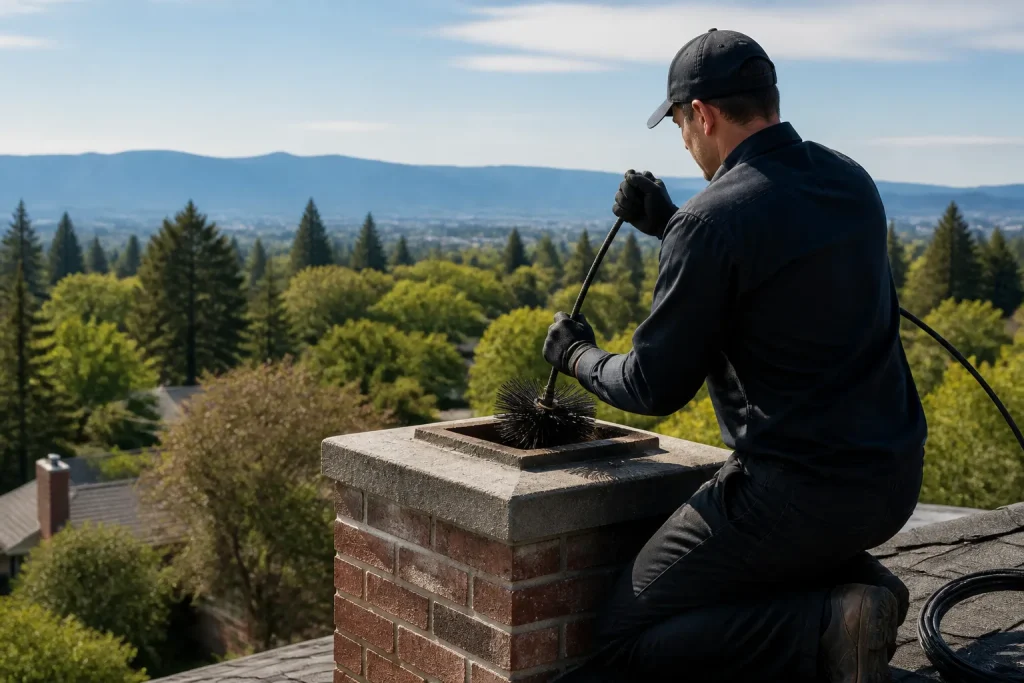
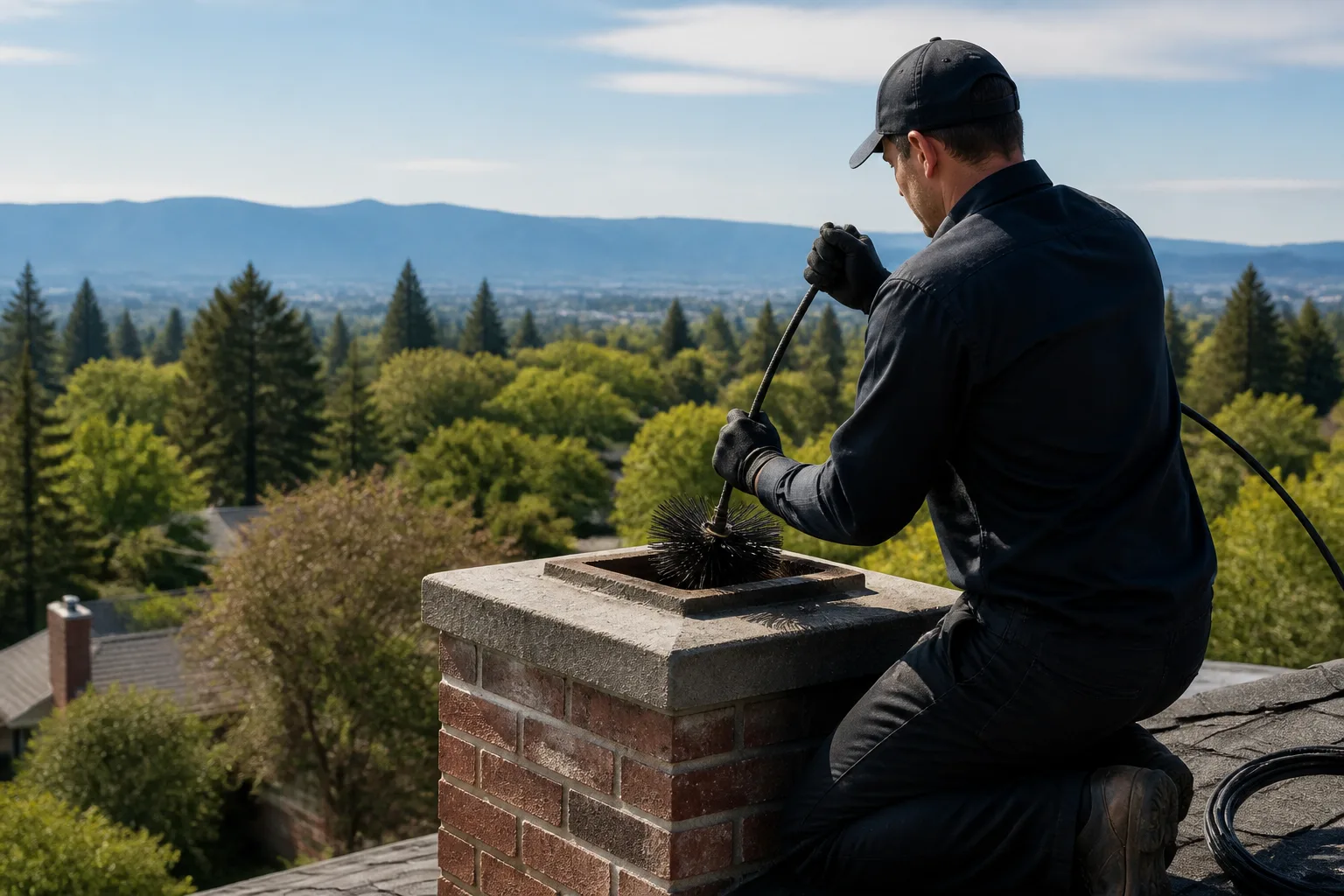
Here’s the practical difference. In a standard terracotta tile flue, we use a wire brush sized to the tile dimensions and run it up and down with aggressive strokes. That works because tile is hard and brittle; it can take the abrasion. A flexible stainless liner cannot. The metal is thinner than tile, and the corrugations concentrate stress at the peaks. Using a brush that’s too large or too stiff, or spinning a rotary brush at high speed, can score the liner walls, flatten corrugations, or loosen the mechanical connections at the top and bottom. We’ve corrected enough DIY and discount-sweep damage in Mountain View homes to be blunt about this: a flexible liner is not a tile flue, and treating it like one shortens its service life. If you’re looking for a technician who knows the difference, a Chimney Sweep in Mountain View should be selected on that basis alone.
304 vs 316: Why the Alloy Grade on Your Liner Matters
DuraFlex liners come in two primary stainless steel grades: 304 and 316. The distinction matters for Mountain View homeowners because these alloys have different corrosion resistance profiles, and corrosion is what eventually kills a liner.
304 stainless is the standard workhorse. It handles wood-burning applications well because wood smoke produces acidic creosote that 304 resists adequately under normal operating conditions. It’s also the more common grade found in older residential installations. 316 stainless contains molybdenum, which gives it superior resistance to chloride corrosion and certain acidic conditions. For gas appliance venting, where condensation can sit inside the liner for extended periods, 316 is the stronger choice because gas combustion produces water vapor that can carry chlorides from outside air into the flue.
What this means in practice: if your Mountain View home has a gas fireplace or gas furnace venting through a DuraFlex liner, and that liner is 304 rather than 316, the expected service life is shorter. The liner will still work, but pitting corrosion tends to develop faster, especially in our marine-influenced air. During an inspection, we check for the telltale signs: small dark pits on the interior surface, roughness that catches a gloved finger, or scaling at the lower sections where condensation pools. None of this shows up in a standard cleaning quote. It requires a camera inspection, which is standard practice at Chimney Sweep Mountain View home service visits.
Why Sweeping a Flexible Liner Requires Different Tools and Technique
If you’ve hired chimney sweeps before, you’ve probably never thought about the brush they use. With a DuraFlex liner, you should. The chemistry of the liner material dictates the tooling.
Here’s what a proper flexible-liner sweep involves:
- Poly brushes instead of steel. Steel wire brushes are standard for tile flues, but they’re contraindicated for stainless liners. Poly or nylon brushes remove creosote effectively without scratching the liner walls. A stiff steel brush can leave micro-abrasions that become corrosion initiation points.
- Correct brush diameter. A brush that’s oversized for the liner creates excessive friction against the corrugations. That friction doesn’t just make the sweep harder; it generates heat and can deform the liner. The brush should be sized to the liner’s interior diameter, not the masonry flue it sits inside.
- Controlled rotation speed. Rotary sweeps are efficient, but high RPM on a flexible liner can cause the brush to whip inside the corrugations. That whipping action beats the liner walls and stresses the connection points at the top plate and the appliance connector.
- Up-and-down passes rather than aggressive scrubbing. The goal is to dislodge creosote from the corrugation valleys, not to polish the surface. A slower, deliberate pass does that without damage.
We stock and work with professional-grade product lines including DuraFlex and Copperfield, so our tooling and protocols are matched to the liner systems Mountain View homes actually have installed. That’s a different conversation than the one you’ll get from a sweep who treats every flue the same. When we perform a Chimney Repair in Mountain View after finding liner damage during a sweep, the transition from diagnosis to fix happens without a handoff to another contractor.
Signs of Wear Specific to Older DuraFlex Installations
Most DuraFlex liners in Mountain View were installed between 2000 and 2015, which means a significant number are now 10 to 25 years old. At that age, certain failure patterns emerge that you should know about because they’re easy to miss if you don’t know where to look.
The three issues we encounter most often on older installations:
- Joint separation at the top connection. The top plate where the liner exits the chimney crown is sealed against weather, but thermal cycling expands and contracts the stainless. Over years, the sealant degrades and the mechanical clamp can loosen. Water then runs down the outside of the liner inside the flue, which causes corrosion on the exterior surface where you can’t see it without a camera.
- Corrosion pitting on the corrugation peaks. The peaks of the corrugations are the thinnest stress points in the liner’s profile. When condensation drips down the interior, it pools in the valleys and runs over the peaks. Pitting starts at the peaks first, which is why a visual inspection from the top of the chimney won’t catch it; the camera needs to see the interior surface.
- Collar seal failures at the appliance connection. Where the liner connects to the wood stove or fireplace insert, the collar is sealed with high-temperature silicone or a gasket. Those seals fail over time, allowing flue gases to escape into the chase or the surrounding masonry cavity instead of exiting through the termination cap. This is a carbon monoxide concern, and it’s one of the reasons a liner inspection should happen before burning season starts.
None of these conditions necessarily mean the liner needs replacement. A competent inspection tells you whether you’re looking at a repair, a resurfacing, or a re-line. What you don’t want is a sweep who simply brushes the interior, writes a receipt, and leaves without looking. We diagnose and fix, not just inspect and leave.
What the Warranty Covers – And What Voids It
DuraFlex liners carry a limited lifetime warranty when installed and documented properly, but the operative word is “documented.” In our experience helping Mountain View buyers and sellers navigate chimney disclosures during real estate transactions, the warranty situation breaks down like this:
What the warranty typically covers:
- Manufacturing defects in the stainless steel itself
- Failure due to combustion product corrosion under normal use conditions
- Some warranties extend to the original purchaser only, others are transferable if documentation exists
What commonly voids it:
- No installation documentation. If the installer didn’t file the paperwork, the warranty is effectively nonexistent. We’ve seen liners that were installed correctly but have zero warranty protection because the homeowner can’t produce the installer’s name, the liner model, or the installation date.
- Chimney fires. A single chimney fire can warp the liner and destroys any warranty claim, even if the fire didn’t cause visible structural damage. The heat excursion is recorded in the metal’s grain structure.
- Improper fuel. Burning treated lumber, trash, or materials that exceed the liner’s temperature rating is grounds for denial.
- Lack of documented sweep history. Some warranty terms require evidence of regular maintenance. No swept history, no claim.
If you’re buying a Mountain View home with a DuraFlex liner already installed, ask the seller for the installation paperwork. If it doesn’t exist, factor that into your understanding of the liner’s effective value. A liner without a warranty is still functional, but your risk calculation changes, and your inspection should be more thorough as a result.
Replacement vs. Relining: What Your Options Are When a DuraFlex Liner Fails
When a flexible liner reaches the end of its service life, you have three paths. The right one depends on the condition of the existing liner, the condition of the masonry chimney around it, and what you’re burning.
Option 1: Full liner replacement. If the existing DuraFlex liner has severe corrosion, joint failure, or damage from a chimney fire, pulling it and installing a new liner is the standard approach. This is where our product-line depth matters. We install DuraFlex systems for homes that need a new flexible liner, especially when the existing flue has offsets or irregular dimensions that make rigid liner impossible.
Option 2: Resurfacing rather than replacing. In some cases, the liner is structurally intact but shows surface-level degradation, minor pitting, or failing seam seals. A HeatShield application can resurface the interior of the existing liner, restoring a smooth, sealed surface without a full reline. This is a specialist procedure that most Mountain View chimney companies don’t offer. We do. The economics are often better than replacement, but the liner has to qualify.
Option 3: When the liner is fine but the chimney needs something else. Sometimes the liner isn’t the problem at all. The issue might be crown repair, flashing, or a damper that needs replacement. In those cases, you don’t want a liner that someone sold you unnecessarily. The camera inspection tells the story, and we show you the footage. You’ll see the condition of the liner walls, the joints, and the terminations with your own eyes before any recommendation is made.
We pulled a liner out of a home in Old Mountain View last month that had been installed in 2004 and never swept once. The homeowner assumed the liner made the chimney maintenance-free. It doesn’t. The creosote buildup inside was dense enough to chip off in chunks, and the liner itself had corroded at the lower seam. That’s a 20-year lesson in one chimney.
When to Call a Pro
If you have a DuraFlex liner and you’re noticing any of the following, schedule an inspection before your next fire:
- An acrid or chemical smell from the fireplace that wasn’t there before
- Visible rust stains on the exterior chimney crown or chase top
- Water in the firebox after rain
- Unusual sounds, like a rattling or ticking from the flue during windy conditions
- You bought the home and don’t know the liner’s installation date or service history
These are the conditions that precede liner failure, and they’re all cheaper to address now than after a chimney fire or a carbon monoxide event. If you’re in Mountain View and you want this looked at, call (866) 596-8327. We’ll put a camera in the flue and show you what we see.
Related services in Mountain View: Dryer Vent Cleaning in Mountain View is handled by the same team, which means the second biggest residential fire risk in your home gets checked in the same appointment.
The Bottom Line
A DuraFlex liner is a well-engineered system that extends the life of a masonry chimney and makes older flues safe for modern appliances. But it’s not invincible, and it’s not maintenance-free. The right sweep uses poly brushes sized to the liner, controlled technique, and a camera inspection after the cleaning. The right company recognizes the difference between a liner that’s doing its job, a liner that needs resurfacing, and one that’s done. If you’re in Mountain View and you need someone who works with this system daily, Chimney Sweep Mountain View offers free estimates. Call (866) 596-8327 and we’ll assess what you’ve got.
Frequently Asked Questions
No. A DuraFlex liner requires a poly brush sized to the liner’s interior diameter and gentler technique than a terracotta tile flue. Steel brushes and aggressive rotary sweeping damage the corrugated stainless surface.
A properly maintained DuraFlex liner typically lasts 15 to 25 years, depending on fuel type, alloy grade, and whether it’s been swept regularly. 316 alloy lasts longer in gas applications than 304; coastal air in Mountain View accelerates corrosion on older liners.
Missing installation documentation, chimney fires, improper fuel use, and lack of documented sweep history are the most common warranty voids. If you’re buying a Mountain View home with a liner installed, the paperwork determines whether you actually have a warranty.
Sometimes, yes. If the liner is structurally sound but shows surface degradation or failing seam seals, a HeatShield resurfacing can restore it without a full reline. The liner must pass a camera inspection to qualify. Call (866) 596-8327 for an evaluation.
Written by the team at Chimney Sweep Mountain View, serving Mountain View since 2015.
Need Chimney Cleaning Help?
Call Chimney Sweep Mountain View - licensed & insured, with free written estimates in Mountain View.
(866) 596-8327