
Last updated November 2, 2026
 Sweep & inspection
 Caps & crowns
 Flue relining
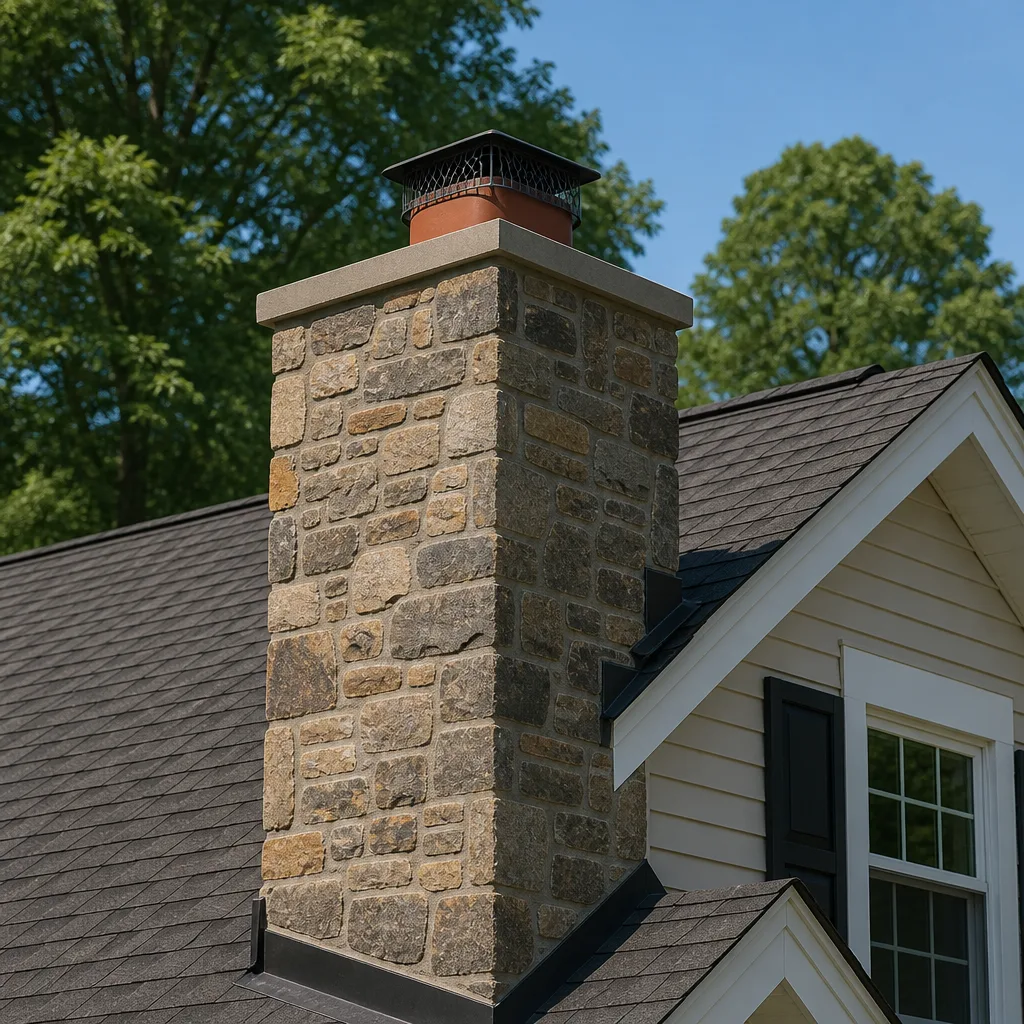 Masonry repair
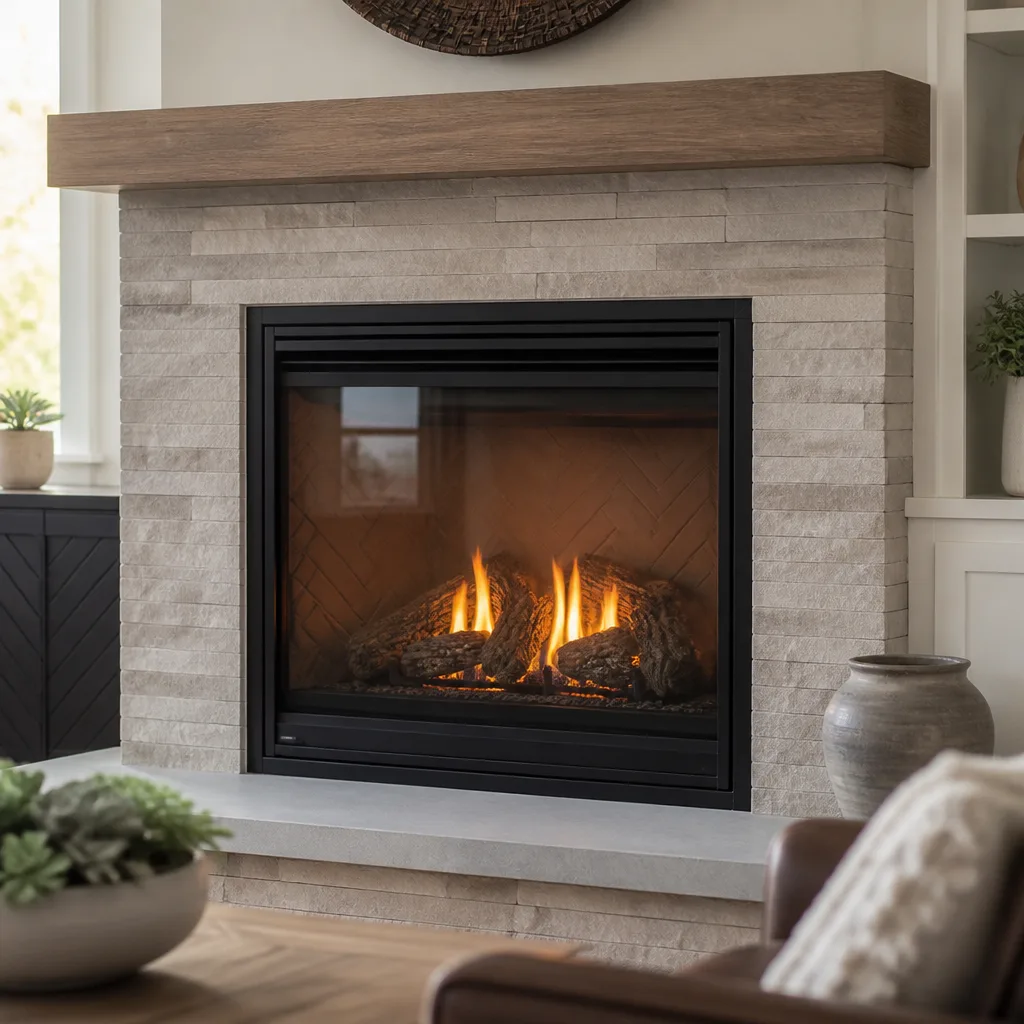 Gas fireplace service
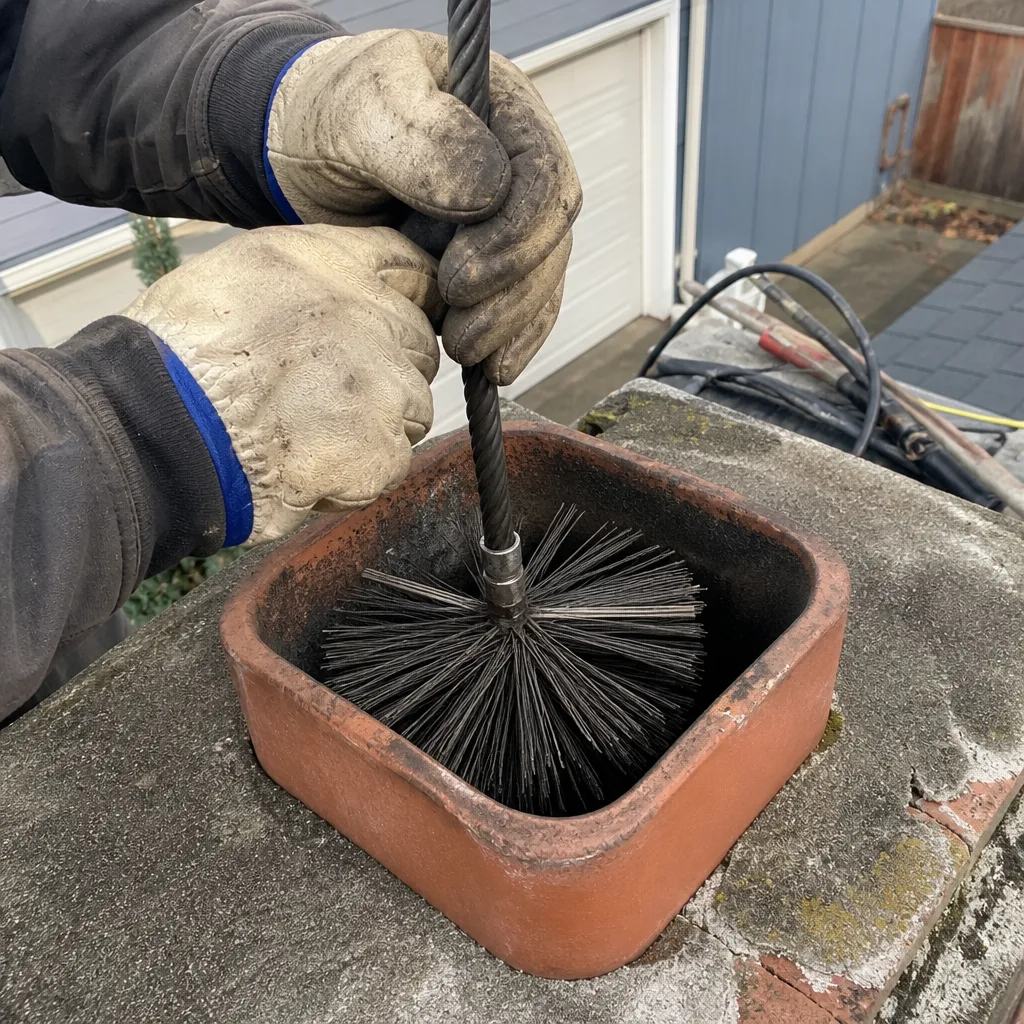
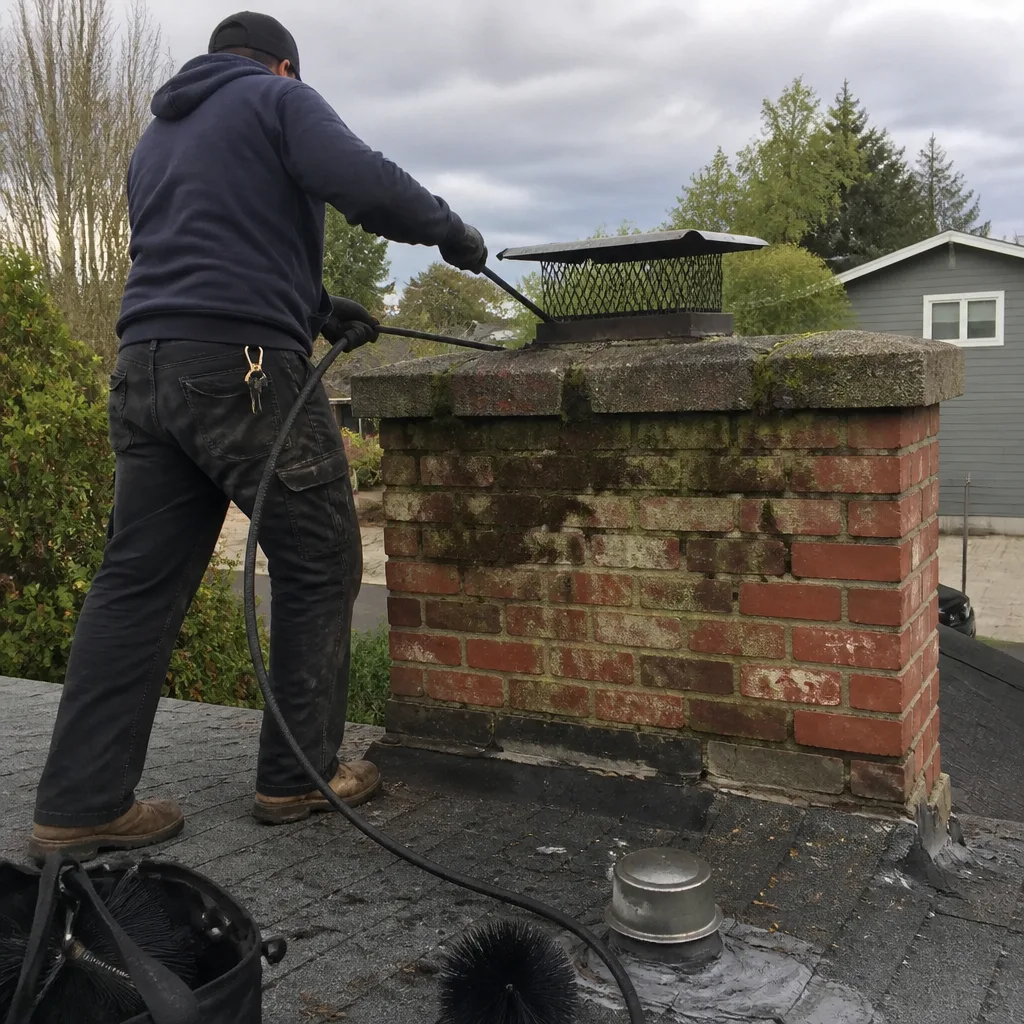
Level 1 sweep and inspection to the NFPA 211 annual standard - flue, crown, cap, and flashing checked and photographed
Chimney sweep logs do not sweep chimneys. They loosen some creosote - which then falls where a brush and vacuum still have to collect it.
How to Hire a Chimney Cleaning Contractor in Mountain View: A Step-by-Step Guide
Most homeowners don’t discover their chimney contractor can’t actually fix anything until they’re holding a $6,000 quote for a new liner and a separate business card for a mason who won’t return calls for three weeks. In Mountain View, where homes built before 1970 sit alongside newer gas-fireplace remodels, the gap between sweep-only operators and full-service venting contractors costs homeowners real money and real months of delay. This guide walks you through the exact questions, credentials, and red flags that separate a true full-system contractor from someone who only pushes a brush and hands you a receipt. For seasonal chimney cleaning care for Mountain View, see our year-round homeowner’s guide. You’ll learn how to filter for repair capability before the first phone call.
Styles & brands we work with
- Sweep & inspection
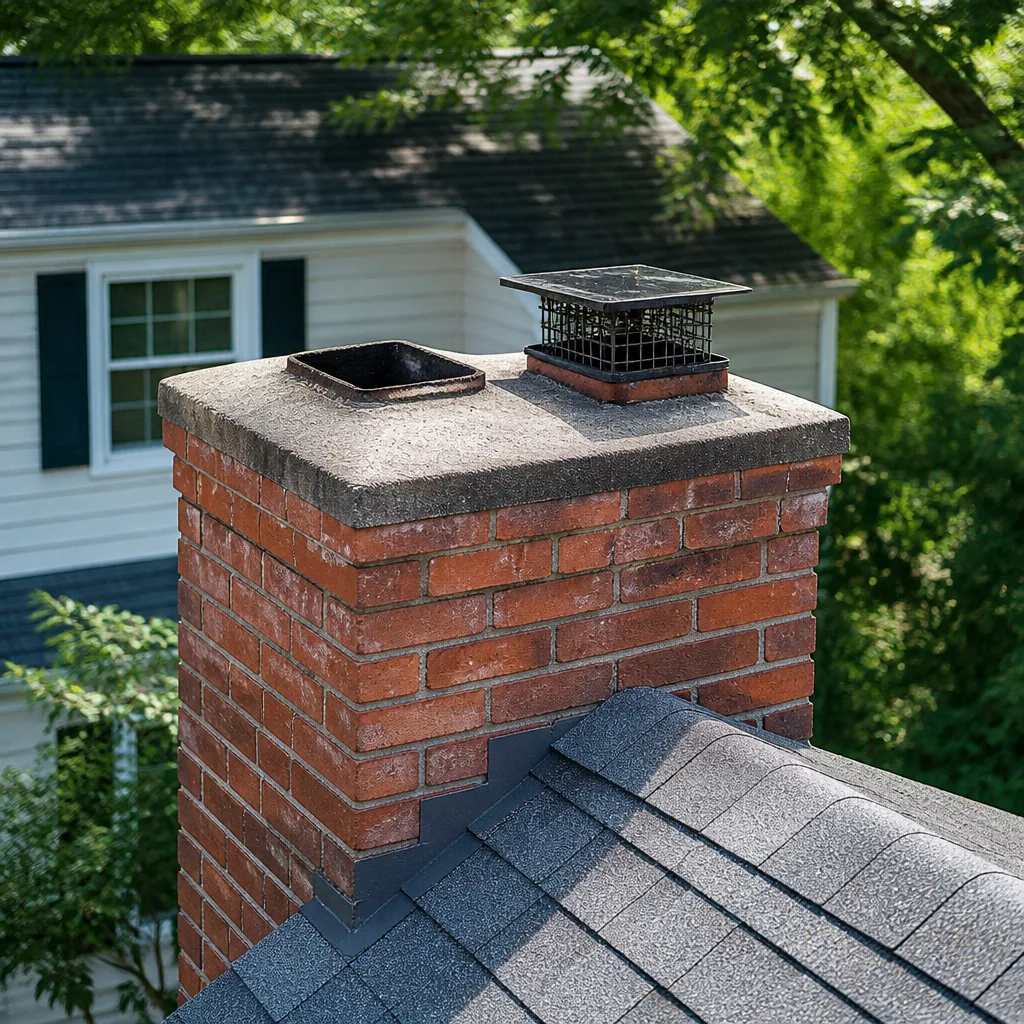
- Caps & crowns
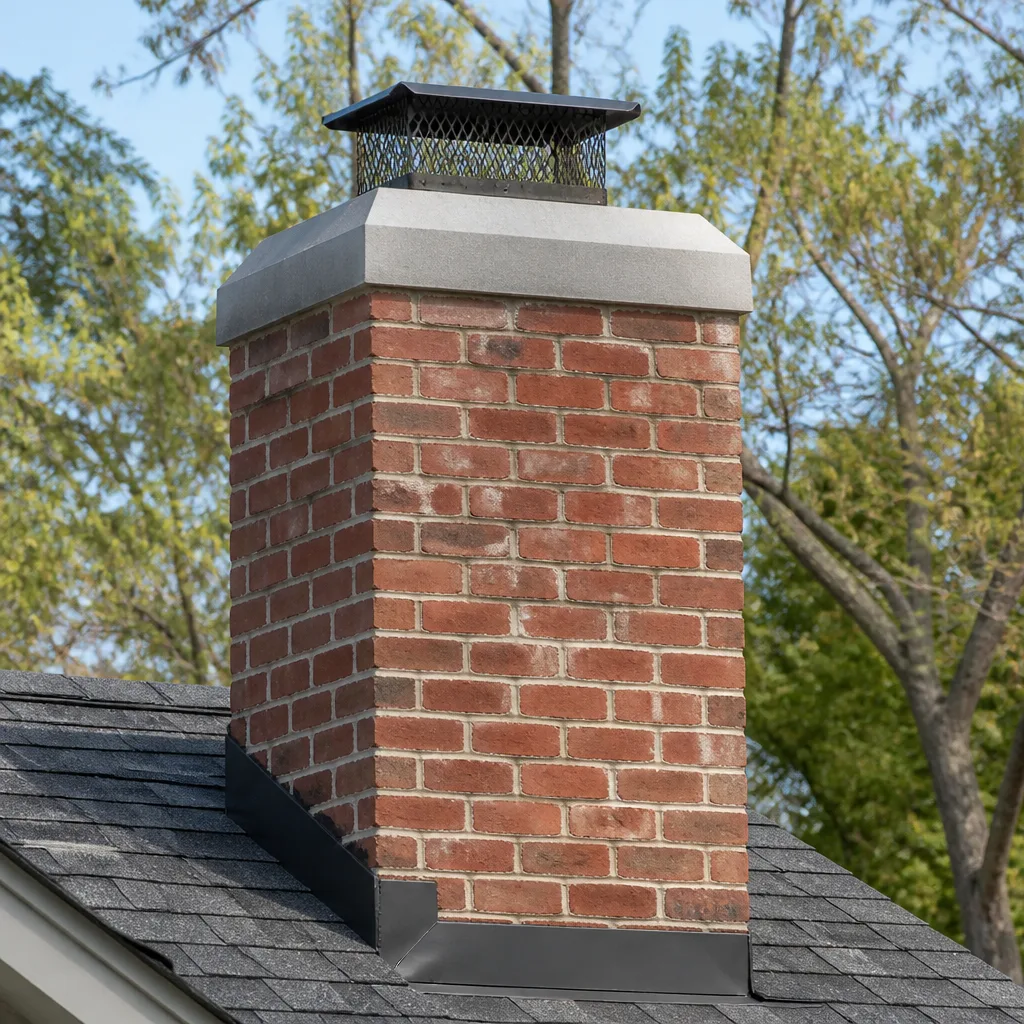
- Flue relining
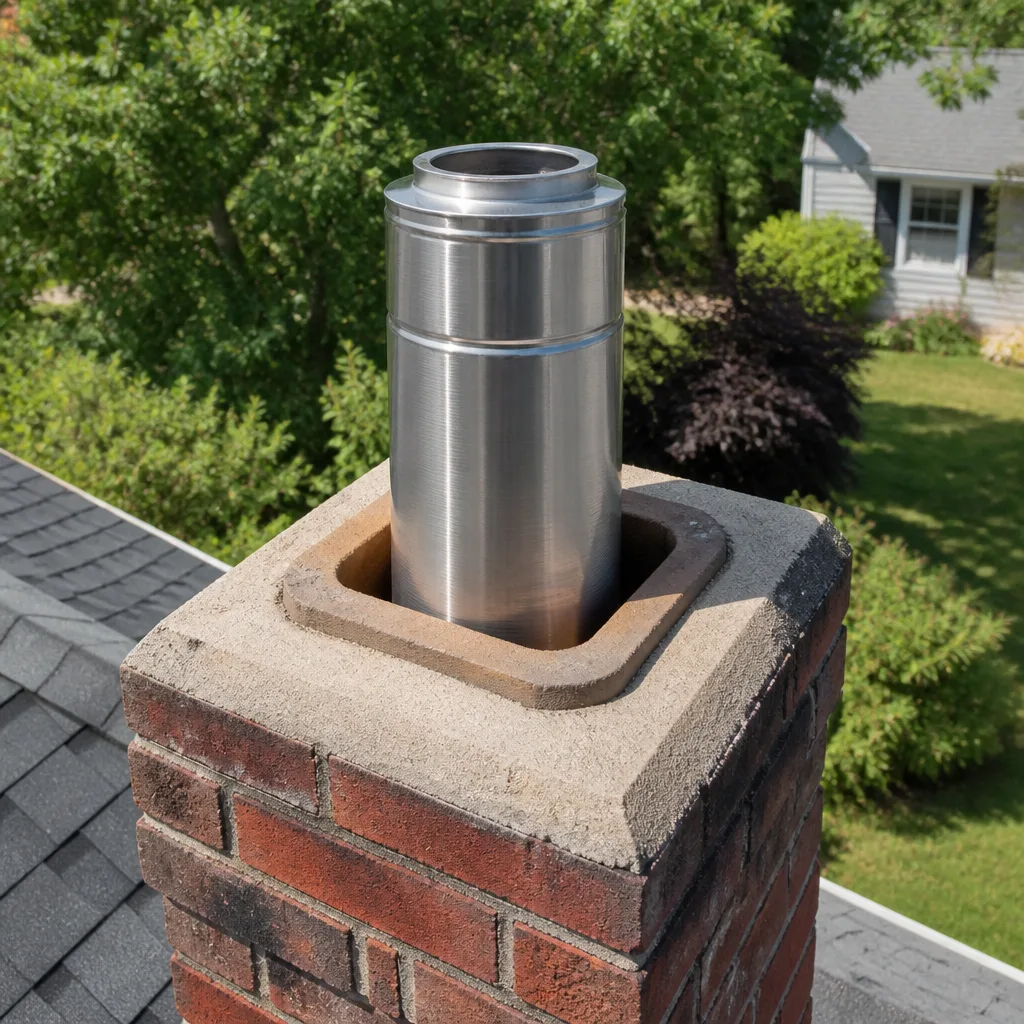
- Masonry repair
- Gas fireplace service
Quick Answer
Hiring a chimney cleaning contractor in Mountain View starts with confirming three things before you book: they perform camera inspections as part of the assessment, they have repair capability on staff rather than subcontracting it out, and they give you a written scope of work with itemized pricing. A CSIA certificate tells you someone passed a written exam; it says nothing about whether they carry the equipment to reline a flue, patch a firebox, or repair a chimney crown on the same visit your inspection uncovers the problem. Those three filters, applied consistently, eliminate most of the unqualified operators in the Bay Area market before you waste a single appointment slot.
Table of Contents
- How to Read a Contractor’s Credential Stack
- The Four Questions to Ask Before Booking
- Red Flags Specific to the Bay Area Market
- How to Compare Quotes Accurately
- Level 1 vs. Level 2 Inspections: What You’re Actually Buying
- Why Your Dryer Vent Belongs in the Same Appointment
- Mountain View Climate and Code: What Actually Matters
- Common Mistakes to Avoid
- When to Call a Professional
- Frequently Asked Questions
- The Bottom Line
How to Read a Contractor’s Credential Stack
A credential stack is the list of certifications and licenses a chimney contractor presents as proof of competence. The problem: most homeowners cannot tell which credentials actually matter and which ones amount to paid memberships with a logo. In Mountain View, where contractors range from sole proprietors with a truck and a brush to full-service venting companies with repair divisions, understanding this stack saves you from hiring someone who can clean but not diagnose.
Start with the non-negotiable item: a California contractor license. For chimney work that involves repair or installation beyond basic sweeping, the state requires either a C-61/D-16 limited specialty license for chimney sweeping, or a C-15 or C-36 license for masonry and plumbing work respectively. A C-15 covers masonry contractors; a C-36 covers plumbing contractors, which includes gas venting and flue liner installation. If a company presents itself as capable of repair work but holds only a sweeping certificate, that repair claim is either licensed under a different number you haven’t verified or it’s not licensed at all. Ask for the license number and verify it with the Contractors State License Board before you sign anything.
Next, the industry certifications. CSIA (Chimney Safety Institute of America) is the most recognized credential for chimney sweeps. It requires a written exam and continuing education. What it does not require: hands-on repair capability, liner installation experience, or masonry training. A CSIA-certified sweep knows how to inspect and clean a chimney safely. That is not the same as knowing how to install a DuraFlex liner system through an offset flue or resurface a firebox with HeatShield. Both are legitimate credentials; they cover different scopes of work.
NFI (National Fireplace Institute) certification covers gas, wood, and pellet appliance installation. NCSG (National Chimney Sweep Guild) is a trade association membership. Neither NFI nor NCSG alone licenses anyone to perform repair work in California. When you see a credential stack, the question to ask is not “how many acronyms do you have?” but “which of these applies to the specific repair you’re recommending?”
At Chimney Sweep Mountain View home, our team works with professional-grade product lines including DuraFlex, Olympia Chimney, Famco, and Copperfield. We stock materials, which means when an inspection turns up a crack or a failing joint, we can discuss repair options on the same visit rather than referring you to another company. That’s the practical test of a credential stack: can they move from diagnosis to remedy without a handoff?
The Four Questions to Ask Before Booking
Before you schedule a single appointment in Mountain View, ask these four questions. They filter out sweep-only operators and phone-quote merchants faster than any online review reading.
- Is camera inspection included in the cleaning, or is it a separate line item? A proper chimney assessment requires visual confirmation of what’s happening inside the flue. If a company sweeps without a camera scan, they’re guessing. You want the camera included or at minimum offered as a standard component. The answer tells you whether they’re equipped to diagnose or just to clean.
- If you find damage when you’re in there, can you repair it on-site? This is the question that separates full-service contractors from sweep-only operators. If the answer involves “we have a guy” or “we’ll bring in a mason,” you’re hiring a middleman. Ask directly: do you install liners, patch fireboxes, and repair crowns? We sweep, repair, and reline, one company, one call. That capability changes the economics of the inspection itself.
- Do you clean dryer vents, and can you do both in one appointment? Your dryer vent and your chimney share a common failure mode: lint or creosote accumulation leading to fire. A contractor who handles both understands full-system venting. This is not a convenience question; it’s a diagnostic-ability question. If they vacuum lint but can’t tell you why your dryer runs long cycles, they’re not a venting specialist.
- What documentation do I receive after the cleaning? You want a written report with dated photos or a video file of the camera scan, a summary of what was found, and a clear recommendation for any follow-up work. If the answer is “a receipt,” keep looking. A receipt proves they showed up. Documentation proves they actually looked.
For Mountain View homeowners, these four questions are the pre-screening tool that eliminates most unqualified operators in under five minutes. Ask them in order. Listen for direct answers, not deflections.
Red Flags Specific to the Bay Area Market
The Bay Area chimney market has its own failure patterns. These are the three red flags we’ve seen repeatedly from homeowners across Mountain View, Palo Alto, and Sunnyvale.
Quoting Over the Phone Without Inspection
A phone quote for chimney cleaning is like a remote diagnosis for a plumbing leak: it might be accurate, but you can’t verify it without looking. The problem in this market is volume operators who quote $99 cleanings over the phone to get a foot in the door, then “discover” expensive problems once they’re inside. A legitimate chimney assessment requires seeing the flue, the firebox, the crown, and the flashing. No honest contractor quotes a cleaning price without knowing the condition of the system. If they quote over the phone, they’re selling an appointment, not a service.
“Inspection Fee Waived With Cleaning” Traps
The pitch sounds generous: book a cleaning, get the inspection free. What this usually means in the Bay Area market is a low-cost entry point that creates a false sense of value. The inspection is free because it’s not a real inspection. It’s a visual glance during the cleaning. A real inspection, particularly a Level 2 inspection with camera equipment, costs money to perform because it takes time and equipment. When a company bundles it as “free,” they’re either not doing it properly or they’re recouping the cost through inflated cleaning prices. Ask for the inspection report in writing. If they won’t commit to that, the free inspection is a marketing line.
No Written Scope of Work
The most dangerous contractors in Mountain View are not the ones who charge too much. They’re the ones who charge too little and deliver a verbal promise. When you hire a chimney contractor, you need a written scope of work: what will be cleaned, what will be inspected, what the camera scan covers, what documentation you’ll receive, and the exact price. Without that document, a dispute becomes “he said, she said” with your fireplace in the middle. In a market this competitive, the absence of a written scope is not an oversight. It’s a strategy.
How to Compare Quotes Accurately
Chimney cleaning quotes in Mountain View are not apples-to-apples. The same $129 cleaning from Company A might include a camera scan and a written report, while Company B’s $89 quote covers only the sweep itself with a visual glance at the firebox. Here’s how to compare what you’re actually paying for.
- Basic chimney sweep: $119 to $199 in Mountain View. This covers the mechanical cleaning of the flue and firebox. It should include plastic sheeting around the hearth, a HEPA vacuum for dust containment, and removal of the creosote or soot from the system. It does not necessarily include a camera inspection or a written report.
- Level 1 inspection: $75 to $125 as a standalone item when not bundled with a cleaning. A Level 1 inspection is a visual check of the accessible portions of the chimney: the firebox, the damper, the flue lining visible from below, and the exterior of the chimney. It’s the minimum standard for an annual check when nothing about the system has changed.
- Level 2 inspection with camera scan: $200 to $350 in the Bay Area. This includes a video scan of the entire flue interior, the smoke chamber, and the connection point between your appliance and the liner. It’s required when you buy a home, when you change fuel types (wood to gas, for example), after a chimney fire, or after an earthquake. In Mountain View, where seismic movement is a real consideration, a Level 2 camera scan is the standard for any older chimney that hasn’t been inspected in years.
- Bundled sweep + Level 2: $280 to $450. This is the sweet spot. You get the cleaning and the camera scan together, which means the technician sees the flue both before and after the sweep. The pre-sweep view shows accumulated creosote and any existing cracks. The post-sweep view confirms the cleaning was complete and reveals damage that was hidden under residue.
When comparing quotes, ask each company to itemize what’s included in their cleaning price. If the $89 quote doesn’t include a camera scan, a written report, and a proper Level 1 inspection, you’re comparing different services. The lowest bid almost always omits the Level 2 camera work. That’s not a savings; it’s a deferred cost that shows up later when you’re selling the home or filing an insurance claim without documentation of the chimney’s condition.
Level 1 vs. Level 2 Inspections: What You’re Actually Buying
The inspection level system comes from the National Fire Protection Association’s NFPA 211 standard, and it’s the most useful framework homeowners in Mountain View can learn. Understanding the difference between a Level 1 and a Level 2 inspection is the difference between knowing your chimney is clean and knowing your chimney is sound.
A Level 1 inspection is a visual examination of the readily accessible portions of the chimney. The technician looks at the firebox, the damper, the visible portions of the flue liner, and the exterior of the chimney from the ground. There’s no camera work, no ladder work beyond what’s needed to see the cap, and no interior access through walls or roofs. It answers one question: does this chimney appear serviceable for continued use under the same conditions? For homes with a simple, straight chimney that’s been cleaned annually and hasn’t changed since the last inspection, a Level 1 is sufficient.
A Level 2 inspection adds a camera scan of the entire flue interior, the smoke chamber, and the appliance connection points. It’s required by NFPA 211 for any of these scenarios: property transfer (buying or selling a home), fuel type change (converting a wood fireplace to gas), mechanical shock (earthquake, lightning strike, chimney fire), or system modification. The camera reveals what a visual glance cannot: cracks in the flue liner, gaps between liner tiles, hidden creosote accumulations in the smoke chamber, and damage to the mortar joints inside the flue.
In Mountain View, where many homes date from the 1950s through 1970s and sit on soil that shifts, a Level 2 inspection is not an upsell. It’s the minimum standard for a chimney that hasn’t been camera-scanned in five or more years. We regularly see clay tile liners with hairline cracks that look fine from below but show clear damage under camera magnification. Those hairline cracks are invisible during a basic sweep. They’re also the reason chimneys fail during the rainy season, when water seeps through and accelerates freeze-thaw damage on the crown.
The cost difference between a bundled sweep with a Level 1 and a bundled sweep with a Level 2 is typically $150 to $200. The cost of discovering a cracked liner after it’s already caused water damage to your ceiling joists is measured in thousands. The math on this is not complicated.
Why Your Dryer Vent Belongs in the Same Appointment
Most homeowners think of chimney cleaning and dryer vent cleaning as unrelated services from different companies. That assumption costs them money on scheduling, and more importantly, it misses the diagnostic overlap these two systems share. Your dryer vent and your chimney are both exhaust pathways for combustion byproducts. Lint is to a dryer vent what creosote is to a chimney: fuel that accumulates on the walls until it blocks airflow or ignites.
The U.S. Fire Administration attributes roughly 2,900 home fires per year to dryer vents, with lint accumulation as the leading cause. When a contractor understands venting as a system rather than a single pipe, they’re looking at the same variables in both places: airflow rate, exit temperature, elbow count, and termination point. A Chimney Sweep in Mountain View who also handles Dryer Vent Cleaning in Mountain View can assess both systems in one visit and identify problems that are invisible when each is handled separately.
Here’s a practical example we see regularly in Mountain View homes: a dryer vent that terminates on the roof instead of the side of the house. Roof terminations are longer runs, which means more lint accumulation, more airflow restriction, and a higher fire risk. They also terminate in the same general area as many chimney caps. A technician who services both systems notices when a roof-terminated dryer vent is blowing lint directly onto a chimney cap, which then gets pulled down into the flue through the natural draft. Separate contractors servicing each system would never see that interaction.
From a practical standpoint, bundling chimney and dryer vent service in one appointment also means one service fee, one scheduling window, and one technician who knows the layout of your entire venting system. For Mountain View homeowners, that’s not a convenience. It’s the same diagnostic mindset a mechanic uses when they look at your car’s entire exhaust path instead of just the muffler.
Our team stocks Famco components for dryer vent systems, which means when we find an improper termination cap or a disconnected joint during a cleaning, we replace it with the right part on the same visit rather than suggesting you buy something at a hardware store and fix it yourself. That’s the difference between a venting specialist and a technician who only pushes a brush through a chimney.
Mountain View Climate and Code: What Actually Matters
Mountain View’s climate and building stock create specific conditions that affect chimney service frequency, inspection standards, and repair decisions. Here’s what actually matters for local homeowners.
Microclimate and moisture. Mountain View sits in the shadow of the Santa Cruz Mountains, which gives it a milder summer than Los Altos or Palo Alto but a wetter winter than you’d expect from its Bay Area reputation. Moisture is the enemy of masonry chimneys. When water penetrates the crown or the mortar joints and then the temperature drops near freezing, the expansion cycle cracks brick and flue tiles. For homes in the older sections of Mountain View near Castro Street and the El Camino corridor, where chimneys date from the original construction and crowns haven’t been resealed in decades, winter moisture intrusion is the most common cause of chimney decline we document. Our chimney cleaning emergency preparedness guide for Mountain View homes covers how to spot these issues before they become urgent.
Seismic consideration. Mountain View sits less than ten miles from the San Andreas Fault and within the shaking radius of the Hayward Fault as well. Earthquakes don’t just crack foundations; they crack flue liners and shift chimney stacks. After any earthquake strong enough to knock items off shelves, NFPA 211 requires a Level 2 inspection before continued use. Most homeowners in Mountain View skip this requirement, then discover the damage during a routine cleaning years later. A camera scan during routine service catches these issues before they become fire hazards or carbon monoxide leaks.
Local building stock. Mountain View has three distinct housing eras that affect chimney work. Pre-1960 homes in the Old Mountain View and Monta Loma neighborhoods typically have masonry chimneys with clay tile liners, which crack under seismic stress and thermal cycling. The 1960s through 1980s ranch homes in Waverly Park and Cuesta Park often have prefabricated metal chimneys, which age out by corrosion rather than cracking. Newer construction and remodels in the North Bayshore area frequently have gas appliances with direct-vent systems that require different inspection protocols. A contractor who only knows one chimney type will misdiagnose the other two. That’s a Mountain View-specific problem that follows directly from the housing diversity here.
Code enforcement reality. Mountain View enforces California’s Title 24 energy efficiency standards and the city’s own building codes for any permitted chimney repair. Unpermitted chimney work is common, particularly for liner replacement and crown repair done at the lowest bid. That unpermitted work becomes a problem when you sell the home and the buyer’s inspector asks for documentation. A legitimate contractor pulls permits when the scope requires them. That adds cost and time, which is why the low bid often comes in lower. Ask any contractor who quotes repair work whether they’re pulling a permit, and if they say no, ask why the scope doesn’t require one. If they can’t explain the code section, they don’t know the code.
Common Mistakes to Avoid
- Hiring based on the lowest bid without itemizing it. A $79 chimney sweep in Mountain View is almost certainly a loss-leader for an upsell pitch, not a sustainable business price. Compare line items, not headline numbers.
- Skipping the camera scan because the chimney “looks fine.” Your chimney’s most expensive problems are invisible from below. Cracks in the liner, damage to the smoke chamber, and water intrusion that hasn’t yet stained your ceiling all live inside the flue where only a camera reaches.
- Choosing a sweep-only operator for an older chimney. Mountain View homes built before 1970 are far more likely to need repair work than a simple cleaning. If the person you hired can’t do repair work, you’ll be hiring twice.
- Not asking about dryer vents because “that’s a different service.” It’s not a different service. It’s the same venting system, and a contractor who handles both catches problems that separate companies would each miss.
- Accepting a verbal report instead of written documentation. If you don’t have photos or video of your flue’s condition, you don’t have a chimney inspection. You have a sales conversation. Written documentation is what you show a buyer, an insurance adjuster, or a future contractor.
- Failing to verify the California contractor license. Sweeping certificates don’t authorize repair work. The Contractors State License Board website takes two minutes to check. That’s the minimum due diligence before anyone touches your chimney.
- Using a gas fireplace and assuming that means no chimney maintenance. Gas logs still produce water vapor and combustion byproducts that corrode metal liners and block venting. A gas fireplace chimney that’s never inspected is a carbon monoxide risk, not a maintenance-free feature.
When to Call a Professional
You should call a professional when any of these situations apply: you’ve never had your chimney camera-scanned and the home was built before 1990, you’re buying or selling a Mountain View home and the property disclosures mention chimney condition, you smell a campfire-like odor in the house when the fireplace is not in use, your gas fireplace is producing a yellow or flickering flame instead of a steady blue one, or your dryer is taking longer than 45 minutes to dry a standard load. These are diagnostic signals, not maintenance reminders. A professional inspection with camera documentation gives you the answer. Guessing gives you a guessing result. Chimney Repair in Mountain View starts with a proper assessment, which is why we quote based on what we see on camera, not what a homeowner reads over the phone. Chimney Sweep Mountain View offers free estimates in Mountain View, call (866) 596-8327.
Frequently Asked Questions
A chimney sweep in Mountain View typically runs $119 to $199 for the basic cleaning, with a bundled sweep and Level 2 camera inspection running $280 to $450 depending on the height and accessibility of the chimney. The range reflects real variables: roof pitch, chimney height, whether the cap needs removal for the sweep, and whether the system has multiple flues. Ask for an itemized quote that separates the cleaning from the inspection component so you know exactly what you’re paying for. Call (866) 596-8327 for an exact quote based on your chimney’s condition. Estimates are free.
You need a camera inspection if your chimney hasn’t been camera-scanned in the last five years, if you’ve bought the home since the last scan, if you’ve experienced any earthquake shaking, or if you’re changing fuel types. The camera sees cracks in the flue liner, damage in the smoke chamber, and connector issues that a visual sweep cannot detect from below. For older Mountain View chimneys, a camera scan is the standard, not an upsell.
The NFPA recommends annual inspection and cleaning as needed, with the cleaning frequency determined by usage. For a fireplace used weekly during the winter months, an annual sweep is standard. For an occasional fireplace used a dozen times per year, every two to three years may be sufficient. Gas fireplaces need annual inspection not for creosote but for vent blockage and carbon monoxide risk. A camera scan during the annual inspection tells you whether a sweep is actually necessary this year or can wait.
Skipping chimney cleaning for several years allows creosote to accumulate in the flue, which has two effects. First, it narrows the effective diameter of the flue, reducing draft and pushing smoke back into the room. Second, it creates a combustible fuel source inside the chimney. A chimney fire burns at temperatures exceeding 2,000 degrees Fahrenheit, hot enough to crack the liner, warp the damper, and spread to surrounding structure. The cost of regular cleaning is a fraction of the cost of repairing a chimney after a flue fire, not to mention the insurance claim process. Call (866) 596-8327 if your chimney hasn’t been swept in three or more years. Estimates are free.
A full-service venting contractor can handle both, and the diagnostic overlap is significant. Lint accumulation in a dryer vent and creosote accumulation in a chimney are the same problem in different systems: combustible material building up in an exhaust pathway. Scheduling both services with the same company means one appointment, one service call, and a technician who understands how the entire venting system interacts. In Mountain View homes with roof-terminated dryer vents and nearby chimney caps, that diagnostic overlap matters for catching problems that separate contractors would never see.
A proper chimney inspection report includes dated photos or video stills from the camera scan, a written summary of the flue condition including any cracks or deterioration, a note on creosote or soot accumulation levels, the condition of the crown, cap, and flashing, and a clear priority ranking for any recommended work. A receipt is not an inspection report. A good report is specific enough that another contractor could read it and perform the recommended work without re-inspecting. If your contractor cannot provide that, they haven’t actually inspected anything.
The Bottom Line
Hiring a chimney cleaning contractor in Mountain View is really a question of capability, not price. Ask the four pre-booking questions. Verify the license. Read the credential stack with enough skepticism to know what a CSIA certificate does and does not mean. Demand a camera scan and written documentation. Recognize that the lowest bid is usually omitting the inspection work that actually tells you whether your chimney is safe. And remember that a contractor who can sweep, repair, and handle dryer vents in one appointment saves you the hidden cost of hiring twice. The right contractor diagnoses and fixes, not just inspect and leave. For more guides & resources, visit our blog. That’s the only kind of contractor worth booking in the first place.
Written by the team at Chimney Sweep Mountain View, serving Mountain View since 2015.
See the difference
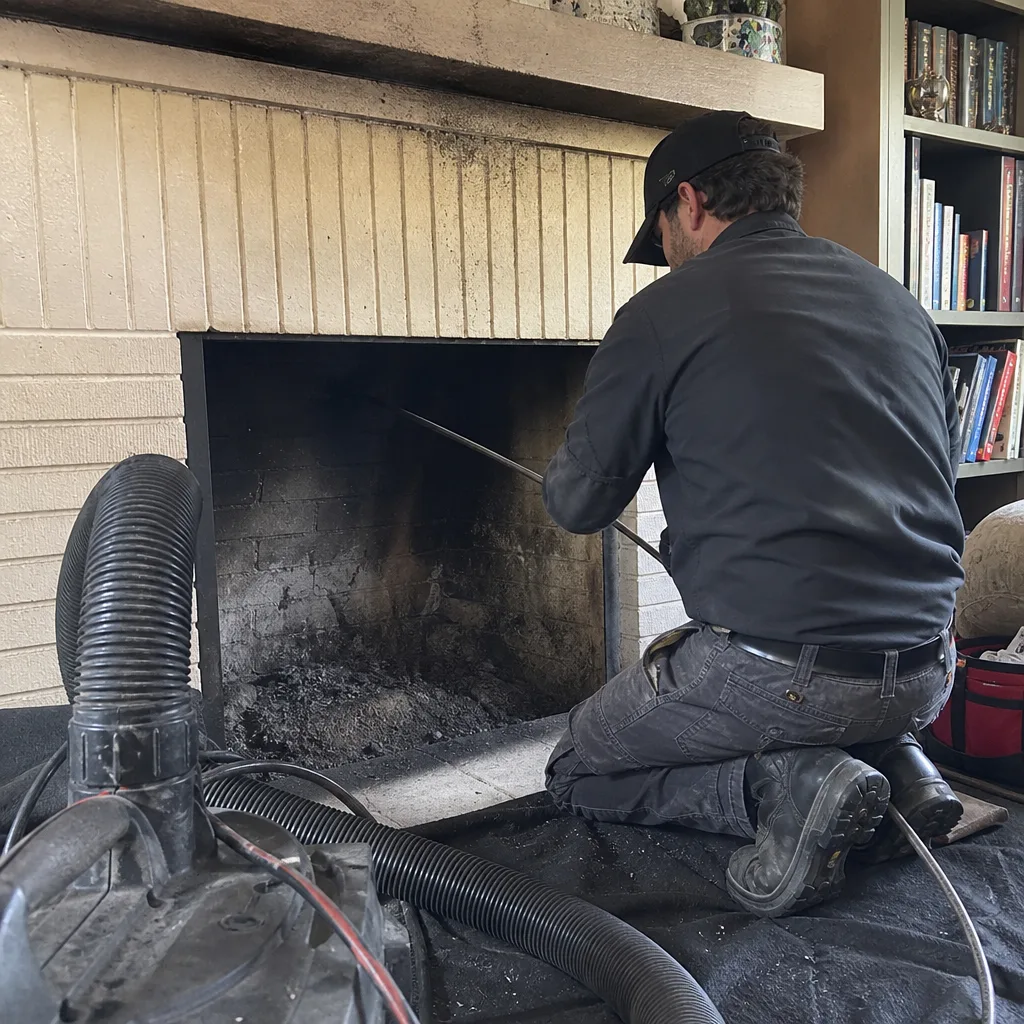 Before
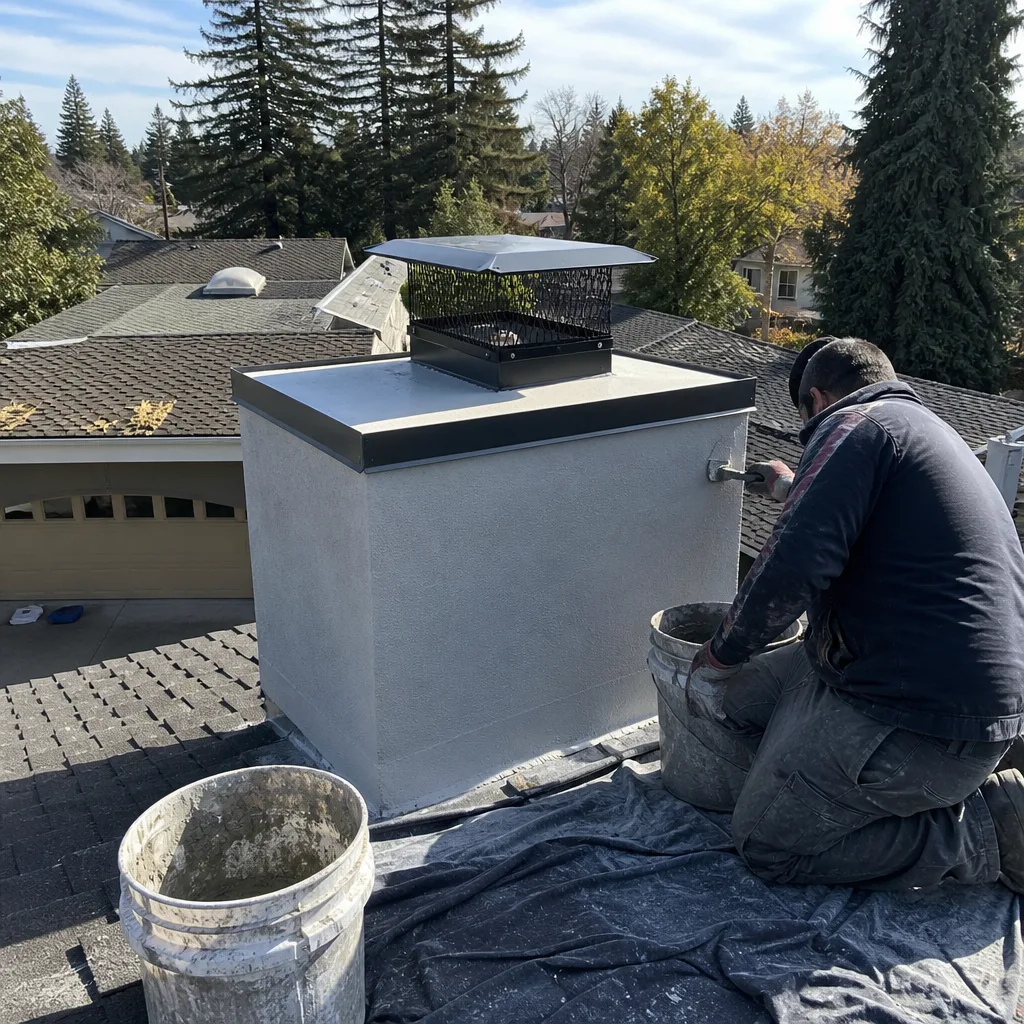 After
 Before
 After
 Before
 After